
Quick summary
Mindful Chef sets the benchmark with a preference quiz that personalises the entire subscription onboarding before a customer has seen a single product. Allplants handles the hardest objection in frozen food, taste credibility, with chef credits, full ingredient disclosure, and a live per-meal price update as customers build their box. Field Doctor is the standout for clinically-led positioning, leading with doctor credentials rather than photography, which earns trust from the specific health-condition buyer nobody else is targeting. Trifle* is worth studying for its delivery-slot scarcity mechanic: real countdown timers tied to genuine capacity constraints that convert urgency into purchases without manufactured pressure.
Ready meals are one of the most demanding ecommerce categories to get right. The product is perishable, the subscription model is the primary revenue driver, and customers are making decisions based on health claims, dietary suitability, and delivery reliability, all before they have tasted anything. The stores that succeed in this space have nailed the onboarding flow, surfaced subscription value clearly on the first visit, and built product pages that answer the key objections before checkout. Here are ten that do it well.
1. Mindful Chef
Mindful Chef is one of the most polished ready meal and meal kit DTC stores in the UK. Their Shopify Plus implementation handles a genuinely complex product catalogue: recipe boxes at multiple serving sizes, ready-made frozen meals, snacks, and a protein-only range, all sitting under one storefront. The navigation is structured by goal rather than category, so a customer arriving with a "high protein" intent lands in a filtered view rather than a full grid.
Their subscription onboarding is the strongest part of the store. Rather than asking customers to browse products first, the homepage routes new visitors into a preference quiz that sets serving size, dietary requirements, and delivery frequency before showing a personalised meal selection. This reduces decision fatigue and lifts activation rates for first-time subscribers. The quiz result page doubles as a product selection tool, meaning the onboarding itself generates an order.
The loyalty and referral mechanics are surfaced throughout the account dashboard, not just at post-purchase. That means repeat customers are consistently reminded of the referral incentive, which is the correct placement for a subscription brand where customer lifetime value makes acquisition cost through referral very attractive.
2. Gousto
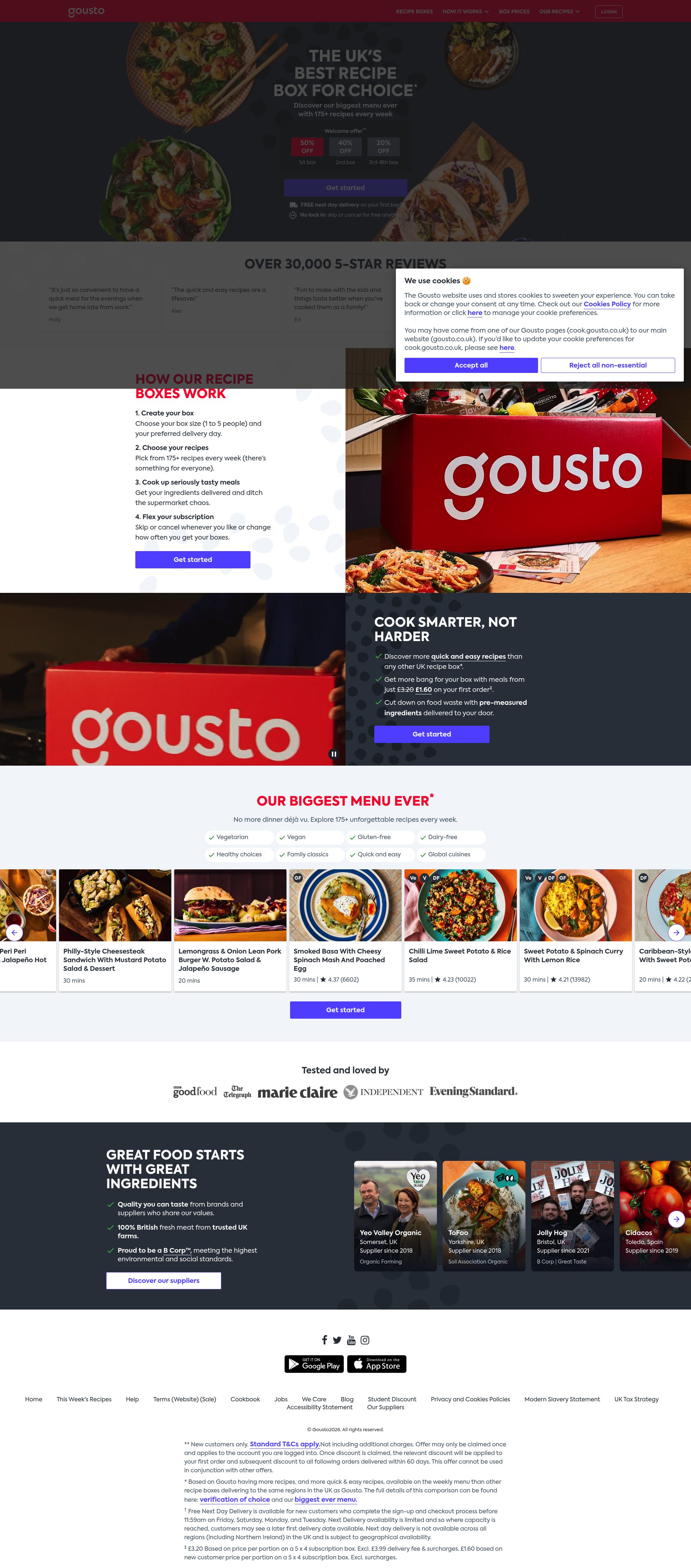
Gousto is a Shopify Plus store operating at scale, and the product experience reflects that. Their weekly recipe selection process is the core mechanic: customers pick from a curated rotation, adjust serving sizes, and manage delivery schedule from a single account view. The UX keeps that process fast, which matters for a product where customers interact with the store every week.
Their price-per-meal framing is applied consistently across the site: on the homepage, on product cards, and on the checkout summary. This is deliberate. Framing a subscription box at per-meal cost rather than total weekly cost reduces sticker shock and makes the value comparison with supermarket alternatives concrete. The meal plan landing pages reinforce this with side-by-side cost comparisons.
Gousto also uses a flexible pause mechanic prominently in the account section, which reduces churn from customers who want to take a break rather than cancel. The option to pause is surfaced before the cancellation flow is ever reached, which is a measurable retention lever for any subscription store.
3. Green Chef
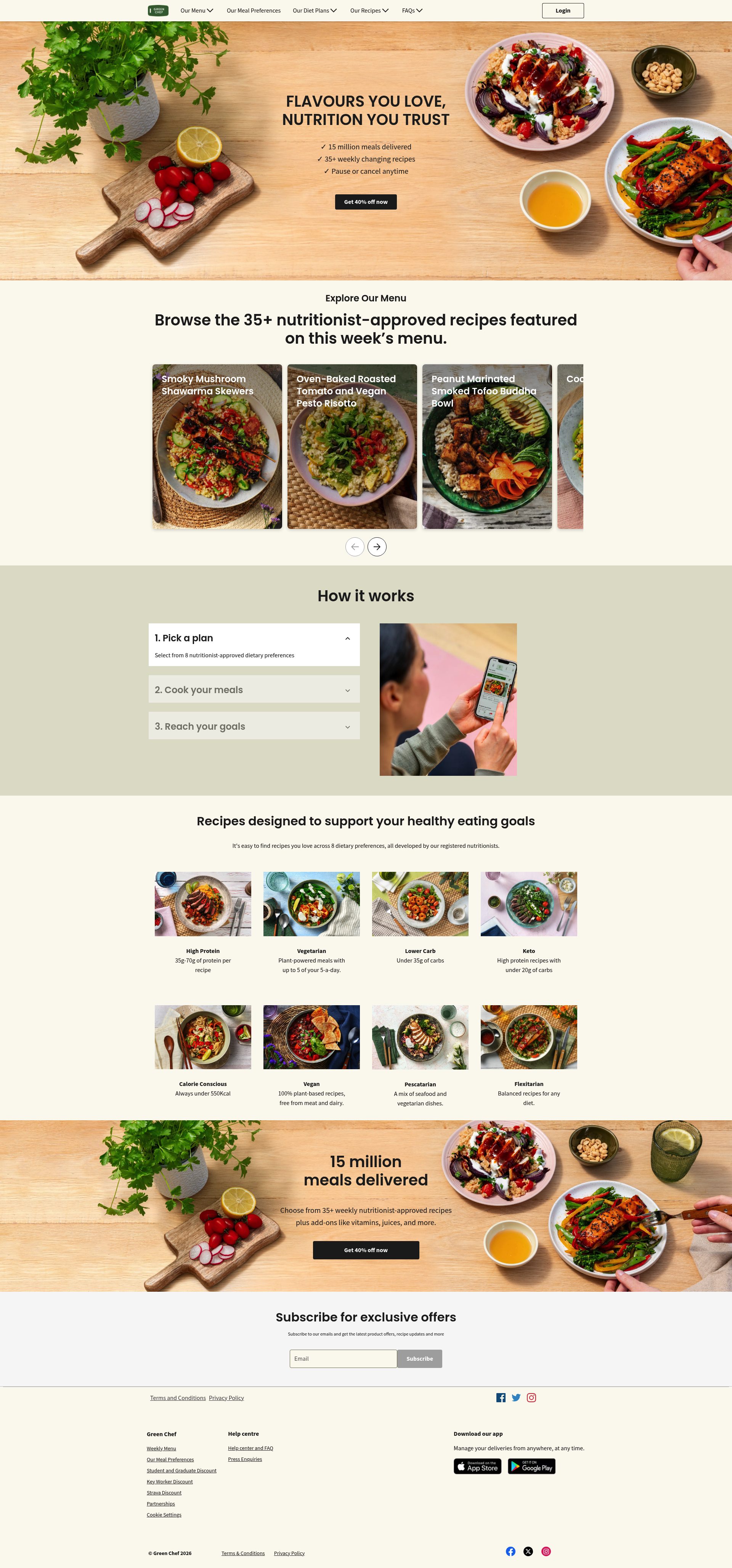
Green Chef is a certified organic meal kit brand that uses Shopify to manage a subscription product with strong dietary segmentation. Their store organises the product range around specific diet plans: keto, plant-based, balanced, and family, each with a dedicated landing page. That structure means a customer arriving from a search for "keto meal kit delivery UK" lands on a page built for that intent, rather than a generic homepage.
The product pages for each meal plan show nutritional information per serving in a scannable format: calories, protein, carbs, and fat, displayed as a simple table. For a health-conscious buyer, this is the first check before any other consideration. Placing it at the top of the PDP rather than in a collapsed accordion reduces the friction that would otherwise push customers to Google the macros themselves.
Their introductory offer (a significant first-box discount) is applied automatically at checkout rather than requiring a code, which removes a friction point that regularly causes drop-off in promotional funnels. The offer is communicated at three points: hero banner, product card, and checkout summary, so customers never feel they might be missing a deal they saw earlier.
4. Graze
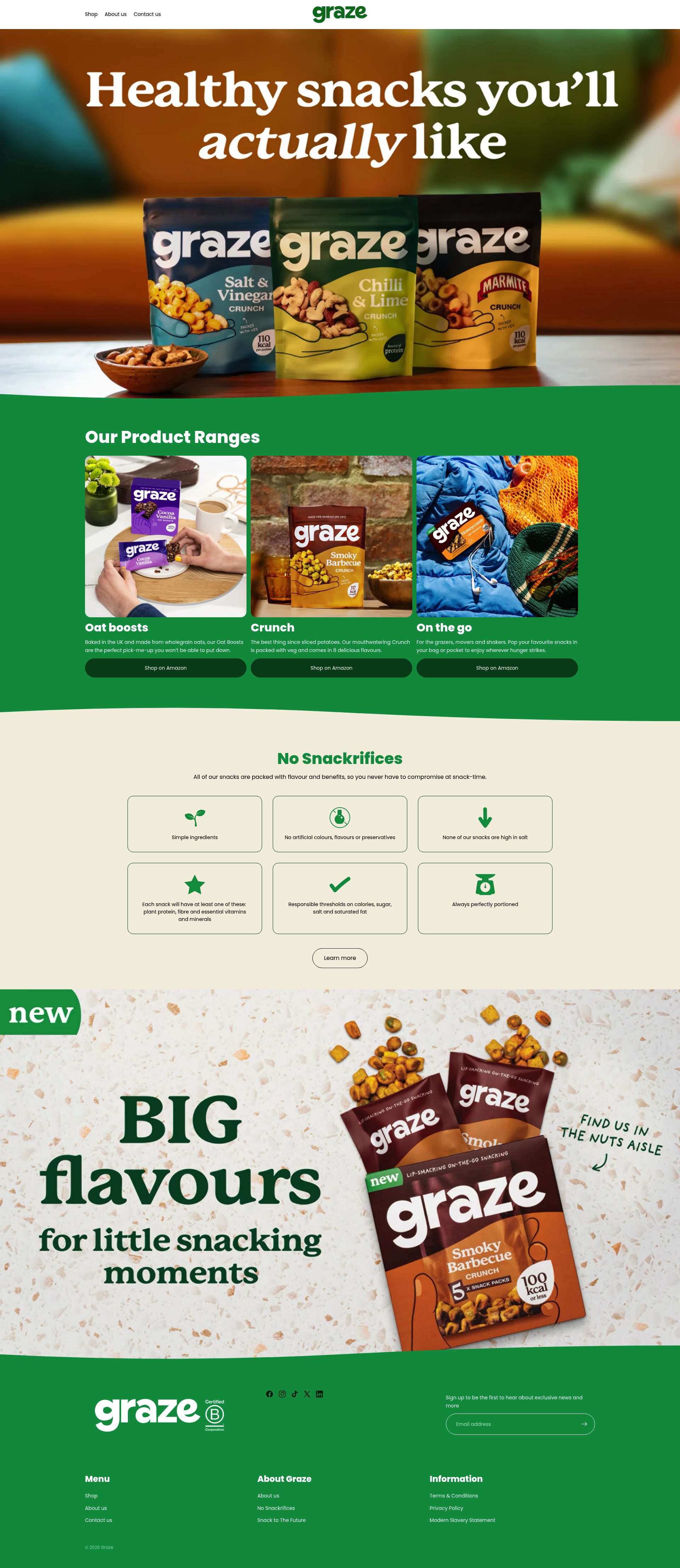
Graze built their business on the subscription snack box model before expanding into retail, and their Shopify store reflects the tension between those two channels. The DTC subscription is the primary offer, with the retail product range presented as secondary. That hierarchy is the right call for margin: a subscriber is worth significantly more over twelve months than a one-off supermarket buyer.
Their personalisation mechanic is worth studying. Customers rate products after each delivery, and the algorithm adjusts the next box based on those ratings. That feedback loop is surfaced in the account dashboard as a core feature, not a passive background process. It gives subscribers a reason to engage with the account area between deliveries, which builds habitual platform use and reduces passive churn from subscribers who simply forget to engage.
The retail product pages include a "subscribe and save" prompt with a clear percentage saving displayed, which creates a gateway from one-off purchase intent to recurring revenue. The prompt appears without being intrusive, positioned below the add-to-cart button as a secondary option rather than the primary CTA.
5. Detox Kitchen
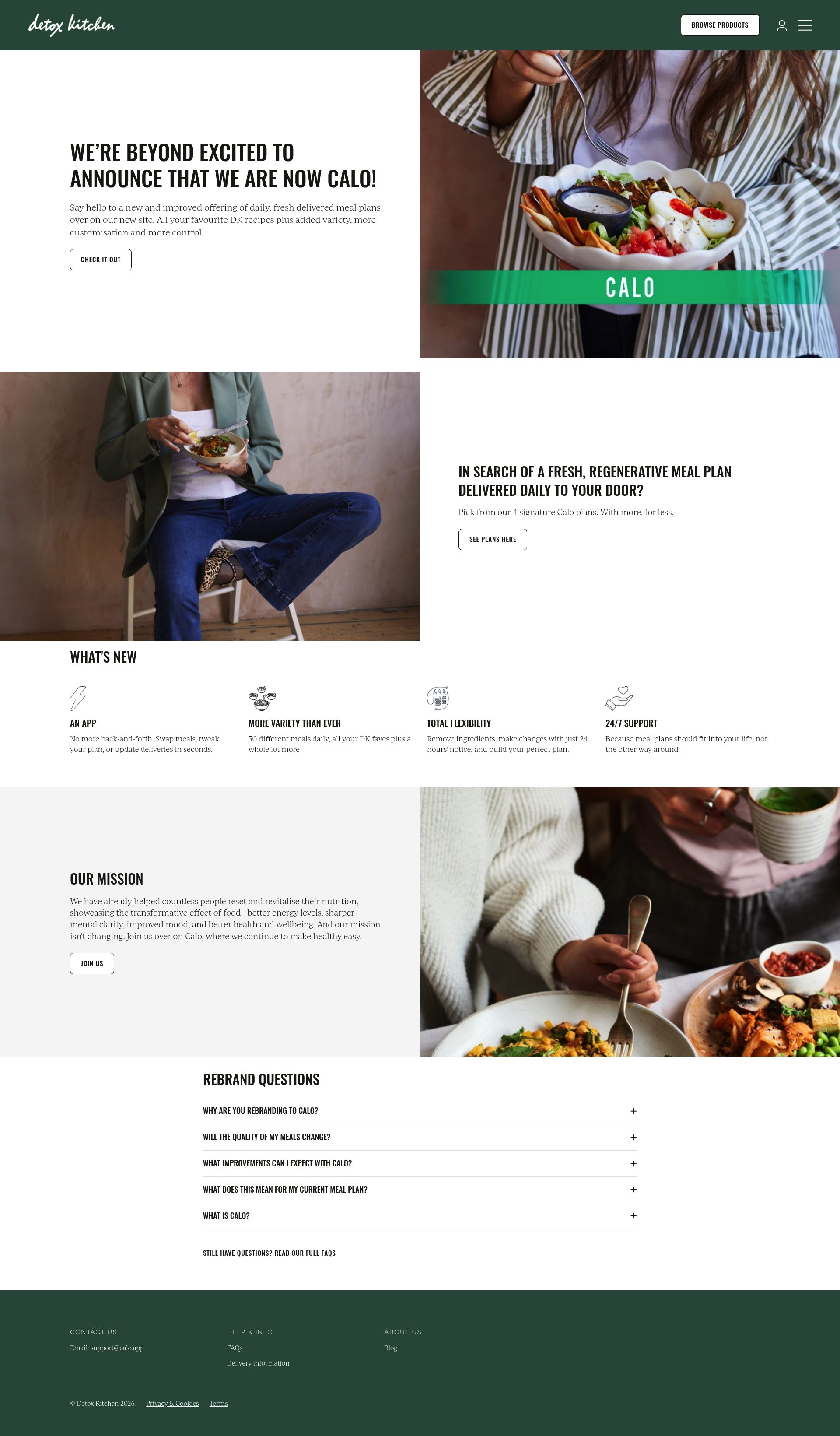
Detox Kitchen's Shopify store operates in the premium health food space, and every element of the store design reflects that positioning. The product photography is clean and editorial, the typography is minimal, and the product pages lead with ingredient quality before price. That sequencing is intentional: a customer who is already sold on the quality argument is more tolerant of a higher price point.
Their ready meal programmes are sold as multi-day plans (3-day cleanse, 5-day plan, 7-day programme) rather than individual meals. That bundling strategy lifts average order value significantly while also creating a commitment structure that benefits completion rates. A customer who has purchased a 5-day programme is more likely to complete the plan and reorder than one who bought a single meal.
The store handles dietary filtering well: allergen information, calorie counts, and dietary labels are visible on product cards in the grid, not just on the individual PDP. This means customers with specific requirements can filter and scan without clicking through to individual products, which reduces the number of steps to purchase.
6. Allplants
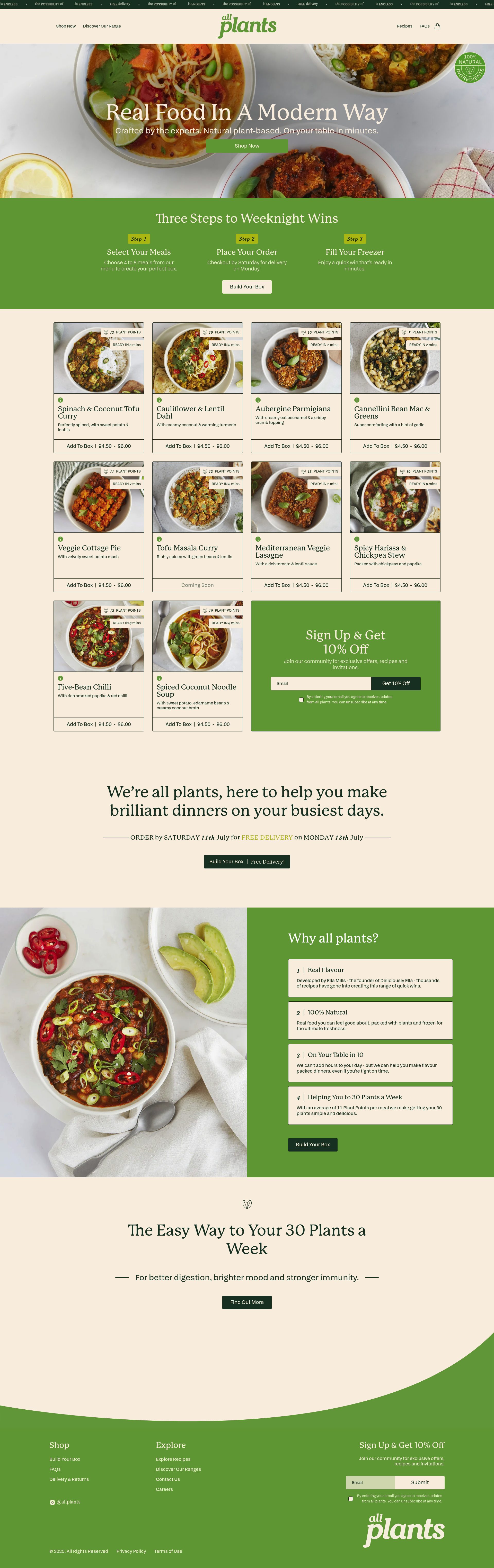
Allplants is a plant-based frozen meal brand that demonstrates how to build a Shopify subscription store around a strong brand identity. Their store is built on Shopify Plus and handles both one-off purchases and subscription management from a single storefront. The homepage prioritises the subscription offer, with one-off purchase available but de-emphasised, which is the correct revenue strategy for a brand where subscriber LTV outweighs one-off order value.
The product pages are structured to reduce the three most common objections to frozen ready meals: taste, quality, and nutritional value. Each PDP includes a chef credit, a full ingredient list, and a nutritional panel displayed without requiring any interaction. Customer reviews are surfaced prominently with filtering by dietary preference, which means a vegan customer can read reviews from other vegans rather than wading through the full review set.
Their "build your own box" subscription selector is the core conversion mechanic: customers choose from a rotating menu of meals, set their delivery frequency, and see the per-meal cost update in real time. The live price update as customers add meals is a strong conversion signal, since it shows the subscriber discount increasing as the box fills.
7. Field Doctor
Field Doctor is a UK ready meal brand positioned at the premium end of the health food market, with a clinical-led product range developed in partnership with nutritionists and doctors. Their Shopify store is built around that credibility signal. The homepage leads with clinical credentials before product photography, which is unusual in the category and correct for their target customer: someone managing a specific health condition or recovery who needs evidence before purchase intent.
The product pages go further than most health food brands in their ingredient and nutritional disclosure. Calorie density, fibre content, glycaemic load, and protein quality are all presented in plain language with brief explanations of why each metric matters. For a customer who is managing diabetes or post-surgery recovery, this level of information is not optional, it is the primary decision driver.
Their subscription mechanic is structured around health programmes rather than recurring orders. A customer buys into a "4-week programme" which has defined outcomes and a specific product selection, rather than choosing meals ad hoc. This framing increases commitment and reduces mid-subscription churn, since customers measure progress against programme goals rather than reevaluating the subscription value on a weekly basis.
8. Trifle*
Trifle* (the asterisk is part of the brand name) is a London-based ready meal brand whose Shopify store is built around weekly order slots. Rather than an open subscription model, customers book into delivery windows, which creates a scarcity mechanic that the store uses overtly: slot availability is shown on the homepage and on product pages, and a countdown to the next order cutoff is displayed in the navigation.
That approach converts urgency into purchase acceleration without manufactured scarcity. The delivery constraint is real, the countdown is accurate, and the slot mechanic is explained clearly at the first touchpoint. Customers understand the model before they commit, which reduces post-purchase confusion and support overhead.
The product photography is distinct in the category: table-set hero shots rather than product-on-white, which positions the brand as a home dining experience rather than a convenience product. That framing justifies a higher price point and differentiates clearly from supermarket ready meals. The store also handles portion customisation at the product level: customers can specify serving size without contacting customer service, which reduces friction for households with different needs.
9. Epicurean
Epicurean is a premium chef-prepared ready meal service operating on Shopify. Their store is designed around the "restaurant quality at home" positioning, and the product pages reflect that with provenance copy for key ingredients, chef names on individual recipes, and preparation method notes. For a customer deciding between a premium ready meal and ordering from a restaurant, those details make the value comparison concrete.
Their gifting range is a strong secondary revenue stream, with a dedicated gifting pathway that includes branded packaging options and a gift message field at the product level rather than checkout. Handling personalisation at the product stage rather than checkout allows the store to show gift presentation options visually, which lifts conversion on higher-ticket gift orders.
The store uses a cross-sell pattern based on meal occasion rather than product category. Customers viewing a main course see starters, sides, and desserts that are styled to match as a dinner set, rather than algorithmically similar products. That curation logic results in larger basket sizes for customers buying for a specific occasion, which is the primary high-value use case for a brand in this price tier.
10. Daily Harvest

Daily Harvest is a US-based Shopify Plus store operating in the plant-based frozen food space, and their subscription onboarding is one of the most studied examples in DTC food ecommerce. The store routes new visitors through a 3-step preference selector before showing any product, which means the first product grid a customer sees is already filtered by their stated preferences. The conversion lift from personalised product display over generic grid is well-documented, and Daily Harvest's implementation is clean and fast.
Their "items" model (smoothies, harvest bowls, soups, bites, and flatbreads all sold as individual portions) gives customers granular control over their subscription box without the complexity of a full meal kit. Customers can mix categories freely, adjust quantities, and swap items before each delivery. That flexibility is surfaced prominently in the subscription management area, which reduces churn from customers who want more control.
The store handles social proof at scale effectively. Product pages show review counts in the thousands for popular items, with a review summary that highlights the most common positive and negative mentions. For a food subscription, negative review visibility is a trust signal rather than a liability: it tells prospective customers the review data is genuine.
If you run a ready meal, meal kit, or health food brand and want a Shopify store that handles subscriptions, dietary filtering, and perishable logistics without losing conversions, SuttonCommerce can help: see our Shopify design service or get in touch.
Frequently asked questions
Which ready meal brands use Shopify Plus?
Mindful Chef, Gousto, Allplants, and Daily Harvest all operate on Shopify Plus. The platform handles their subscription management, high-volume order processing, and complex product catalogues with dietary segmentation. Most scaled food DTC brands migrate to Shopify Plus once subscription volume and catalogue complexity outgrow standard Shopify plan limits.
How do ready meal Shopify stores handle subscriptions?
The best ready meal stores build subscription logic directly into the product selection flow rather than treating it as an add-on at checkout. Mindful Chef uses a preference quiz to set frequency before showing products. Allplants uses a live price calculator that shows per-meal cost updating as the box fills. Trifle* gates subscription access through delivery slot booking. Each approach locks in the subscription commitment earlier in the funnel, which significantly improves activation rates.
What conversion tactics work best for food subscription stores?
Per-meal price framing consistently outperforms total weekly cost framing for subscription food brands. Introducing dietary and preference filtering before the product grid reduces decision fatigue and increases first-order activation. Prominent pause mechanics in the account area reduce churn from subscribers who want a break rather than a cancellation. Flexible skip or swap options, surfaced proactively before the renewal date, are the single most effective passive retention lever.
How should a ready meal brand present nutritional information on Shopify?
Nutritional data should appear on product cards in the grid, not just on the individual product page. Customers with dietary requirements, particularly those managing health conditions, will not click through to check macros on every product. Green Chef and Field Doctor both display calories, protein, and key nutritional metrics in scannable format at the top of the PDP, above the fold, rather than in a collapsed accordion or a PDF download.
What makes ready meal ecommerce harder than other food categories?
Three factors combine to make ready meal DTC uniquely difficult: the product is perishable, which adds delivery and fulfilment complexity; subscription is the primary revenue model, so a poor onboarding flow has compounding LTV impact rather than just a single lost sale; and health claims are the primary purchase driver, meaning customers arrive with high information needs around allergens, macros, and ingredient sourcing that must be answered on the page before checkout.