

Quick summary
Kith sets the benchmark for drop mechanics on Shopify Plus, turning every collaboration into a culturally coordinated brand moment with editorial context and queue management baked into the storefront. END Clothing is the strongest commercial performer in the UK, generating over £220 million in revenue through a high-AOV mix of sneakers and apparel on a tightly curated product page structure. CARIUMA is the standout DTC pick for sustainable footwear, with a Shopify build that drove 20 to 30 percent month-on-month revenue growth by balancing values-led messaging with clean conversion flow. Footpatrol and Sneakersnstuff both demonstrate how specialist heritage translates online: deep launch calendars, exclusive colourways, and product pages that treat sizing as a conversion problem, not a footnote.
Footwear is one of the most demanding categories in ecommerce. Customers need confidence about sizing before they'll commit, return rates are punishing when they get it wrong, and in the sneaker world, limited drops can make or break a brand's long-term engagement. Shopify has become the platform of choice across the footwear spectrum: from heritage UK independents to global DTC brands and authenticated resale marketplaces. These ten stores are getting the fundamentals right, and in several cases, setting the benchmark for how sneakers and trainers should be sold online.
1. Kith
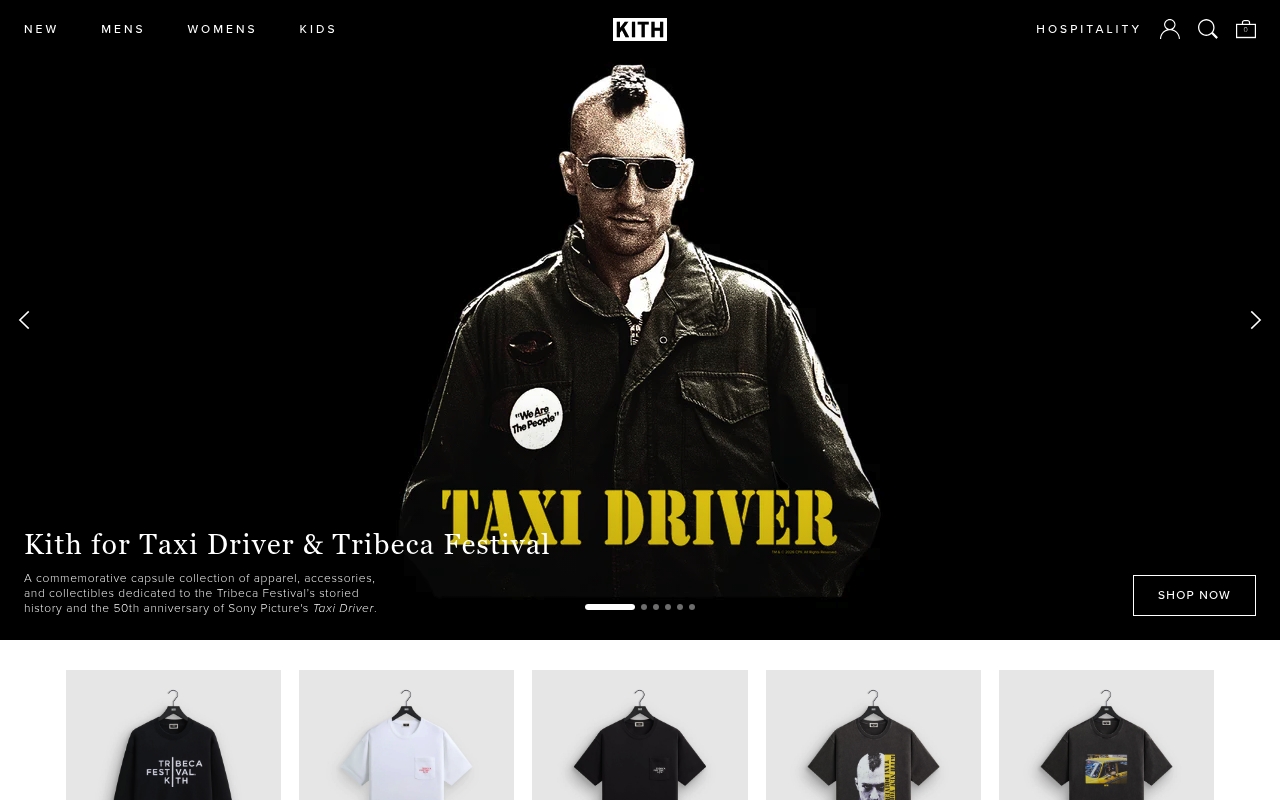
Kith runs on Shopify Plus and it shows in how the entire store is built around launch mechanics. Founded by Ronnie Fieg in New York, Kith sits at the intersection of luxury, streetwear, and sneaker culture. Collaborations with adidas, New Balance, and Nike don't arrive as routine product uploads: they land with editorial context, campaign imagery, and storefront layout changes that make each drop feel like a culturally significant event rather than a product launch. Product pages are clean and fast, with size selection front and centre and clear stock indicators that communicate scarcity without feeling gimmicky. The integration of Shop Pay and Klaviyo smooths the checkout and post-purchase journey at precisely the moment demand is at its peak, which matters enormously when hundreds of customers are competing for the same pair. The broader lesson: on Shopify Plus, scarcity and editorial context can be coordinated tightly enough to turn a product drop into a brand moment.
2. Footpatrol
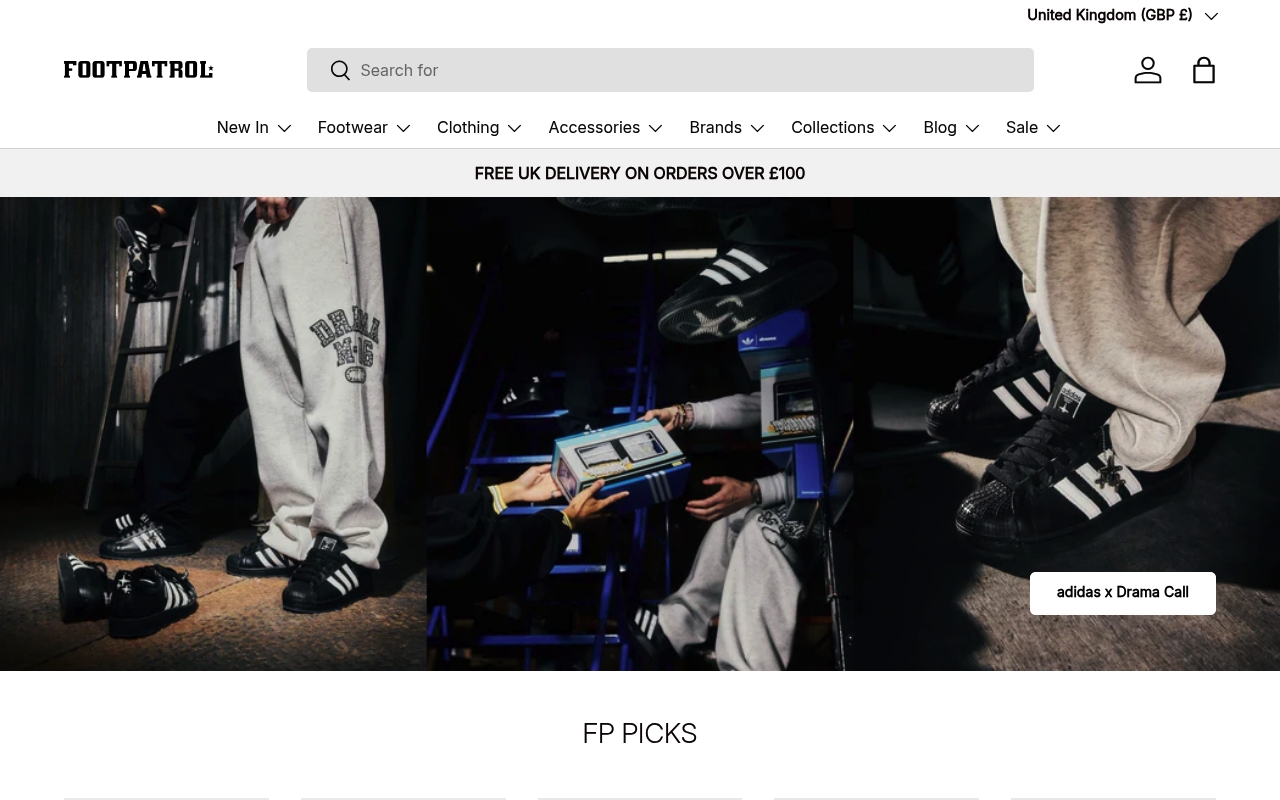
Footpatrol has been a fixture of the London sneaker scene since 2002, and its Shopify store translates that specialist credibility into a sharp online experience. The product catalogue covers Nike, adidas, New Balance, Salomon, ASICS, and Vans, with exclusive colourways and brand collaborations that you won't find in mainstream retail. Product pages are well-structured: multiple photography angles, clear size availability displayed by both EU and UK sizing, and a launch calendar section that gives customers advance notice of incoming releases so they can plan rather than scramble. The overall aesthetic is heritage-rooted but the UX is contemporary, with a mobile experience that works well for the audience most likely to be checking drops on their phones. What Footpatrol does particularly well is balance the authority of a specialist with the accessibility of a mainstream retailer: you don't need to be a deep sneakerhead to navigate the store comfortably.
3. Asphaltgold
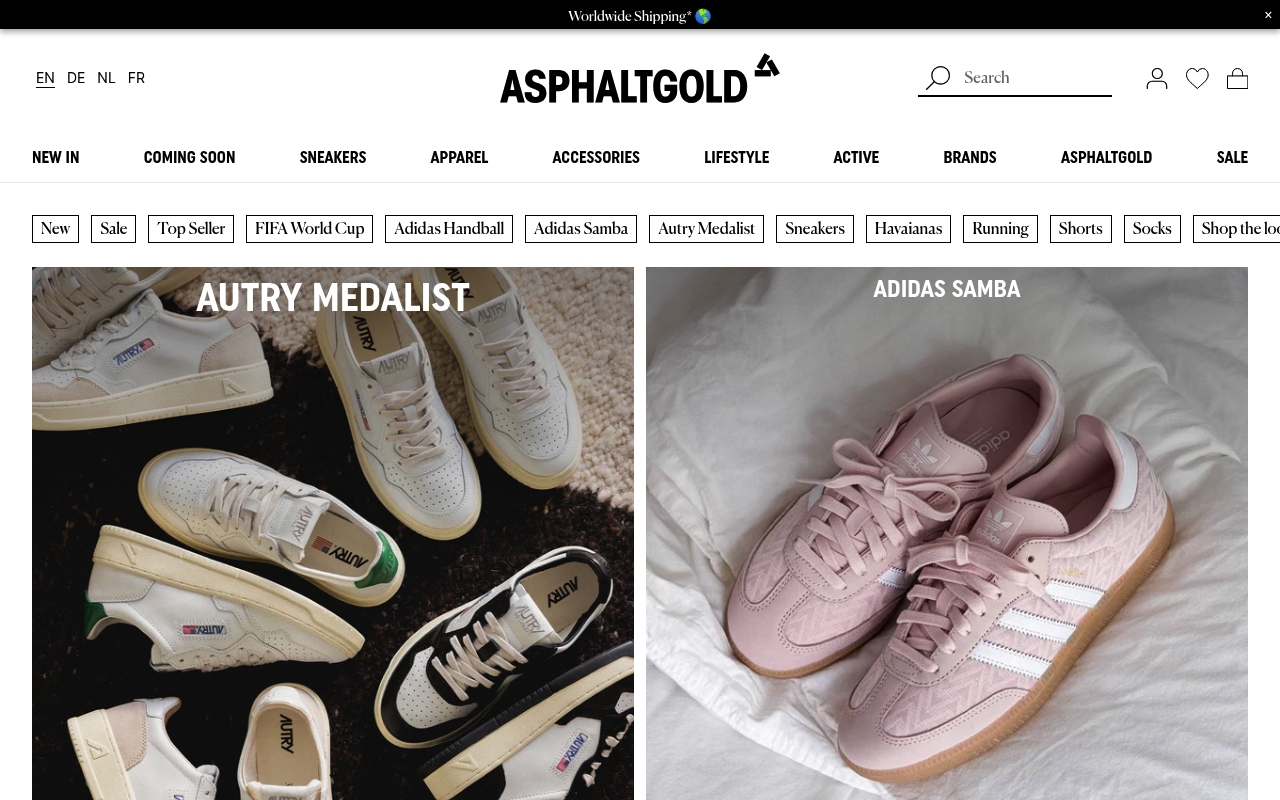
Asphaltgold migrated from Magento 2 to Shopify Plus, and the platform switch gave them the flexibility to build a proper editorial sneaker destination rather than just a product catalogue. Based in Darmstadt and operating since 2008, they serve the DACH region but ship internationally. Their Shopify store integrates a launch calendar, lifestyle video content, and collector-focused editorial directly alongside the shopping experience. Exclusive releases are well-merchandised with enough context that customers understand the cultural significance of what they're buying. Size selectors are clear, and product pages use structured tabs to surface fit information without cluttering the main view.
4. Wethenew
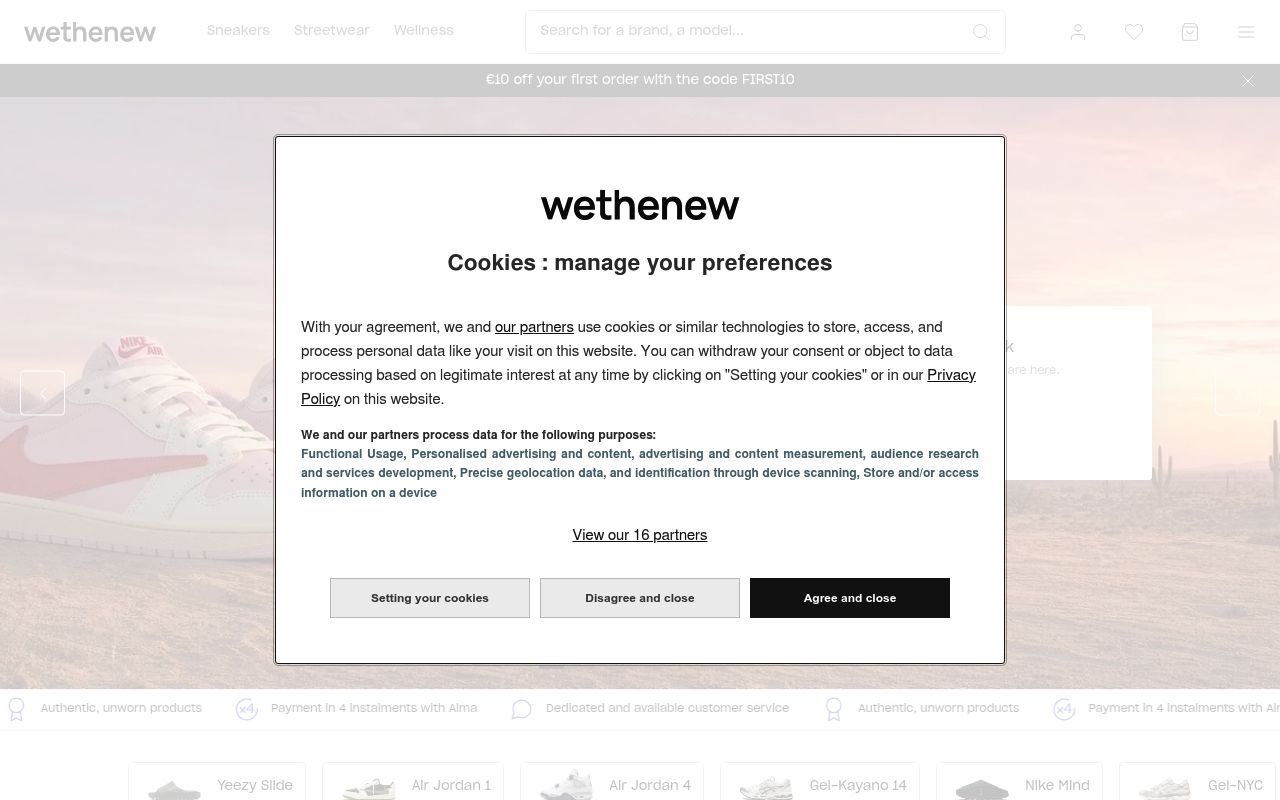
Wethenew was founded in Paris in 2018 as an authenticated marketplace for limited-edition sneakers and streetwear, and it's built on Shopify with the kind of clean gallery layout that makes browsing large catalogues straightforward. Each product listing uses a white-background photography approach that keeps focus on the shoe itself, with price, brand, and model visible directly in the gallery view for easy comparison. Customers can pay via instalment options including Afterpay and Klarna, which meaningfully reduces friction on higher-value pairs. The multi-language capability across six European languages and transparent shipping and returns policies, placed prominently rather than buried in a footer, give the store a trustworthy feel that supports conversion on big-ticket items.
5. CARIUMA
CARIUMA is a Brazilian DTC brand that built its Shopify store around sustainable sneaker credentials without sacrificing UX quality. Each pair is made from organic cotton, bamboo, and natural rubber, and the brand ships carbon-neutrally. The homepage establishes social proof immediately: press coverage, certifications, and the brand's "plant two trees per pair" commitment are visible before the customer even reaches the product catalogue. Their mega-nav makes it easy to filter by gender, style, and material, and product pages surface the sustainability story alongside practical information like size charts and customer reviews, without letting the ethical messaging overwhelm the purchase flow. CARIUMA partnered with Shopify development agency Anatta to build the store properly from 2019, and the result is a DTC setup that grew revenue at 20 to 30 percent month-on-month: a rate that wouldn't have been possible without a Shopify infrastructure that handled scaling without degrading the customer experience. For brands trying to balance values-led positioning with commercial conversion, CARIUMA's product page structure is worth studying.
6. Sneakersnstuff (SNS)
Sneakersnstuff is a Stockholm-founded retailer with physical locations in London, Paris, Berlin, and Los Angeles, and a Shopify store that functions as a genuine cultural platform rather than a transactional catalogue. SNS has been collaborating with major brands since the late 1990s, and that heritage shows in how the storefront is structured: editorial content, lookbooks, and release news sit directly alongside product pages in a way that builds dwell time and repeat visits rather than just processing transactions. The launch section is clearly signposted, giving customers a reliable destination for tracking upcoming drops and understanding the story behind each release. The confirmed list functionality lets customers register interest before stock goes live, giving SNS valuable demand data while reducing the friction of high-traffic drop moments. For UK customers in particular, the London store ties the online and physical experience together with a coherent brand identity that makes Sneakersnstuff feel like a destination rather than a retailer.
7. Kick Game
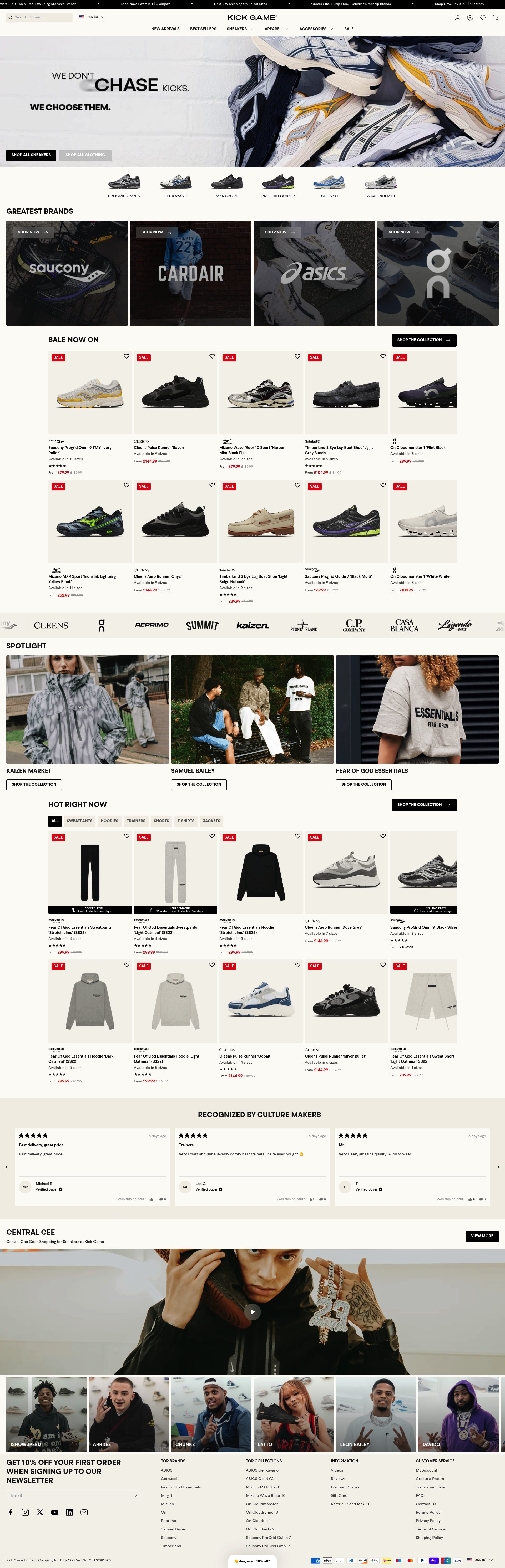
Kick Game is a UK-based authenticated resale and retail platform on Shopify that has positioned itself at the intersection of sneaker culture and luxury. Product photography is high quality, with each pair shot against clean backgrounds and supplemented with condition notes and authentication details where relevant. The size finder is practical and the catalogue is filtered effectively so customers can narrow down by brand, size, and colourway without wading through irrelevant results. Trust signals are prominent: authentication guarantees, buyer protection policies, and Trustpilot ratings appear throughout the purchase journey. For UK sneaker buyers who want authenticated limited pairs without the uncertainty of a peer-to-peer marketplace, Kick Game's Shopify store handles the job well.
8. END Clothing
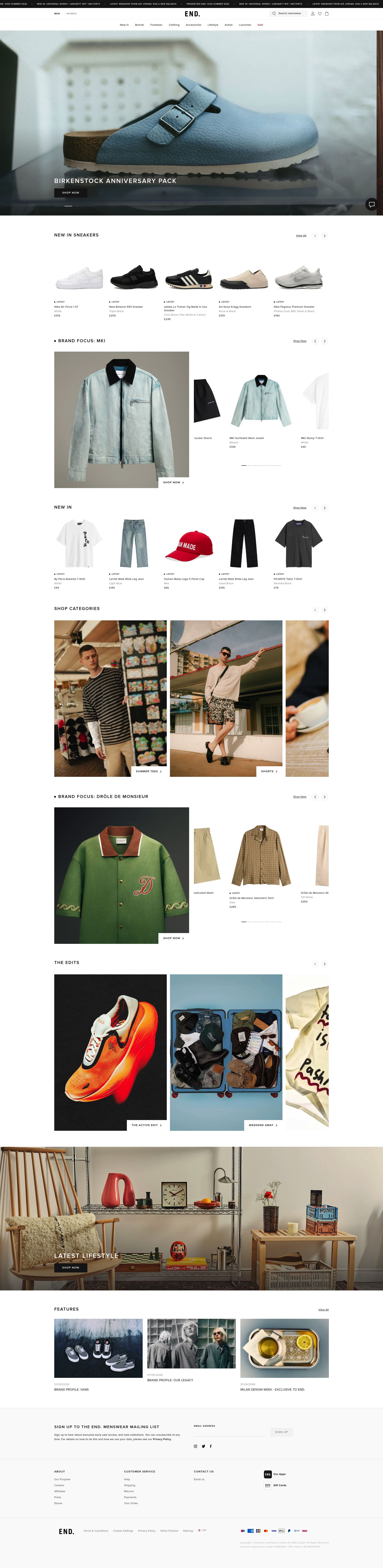
END Clothing started in Newcastle in 2005 and has grown into one of the most commercially successful sneaker and luxury fashion retailers in the UK, generating over £220 million in revenue in 2025. The Shopify-powered store curates a tightly edited mix of Nike, adidas, New Balance, and contemporary designer footwear alongside clothing, creating a high-AOV environment where a customer browsing trainers will naturally move into apparel. Product pages are detailed, with multiple images, sizing guides, and a style perspective that gives editorial weight to what could otherwise be a commoditised product. The drop mechanic is well-established: END releases are scheduled events with email alerts, and the queue system manages demand without degrading the experience for genuine buyers.
9. Soleheaven
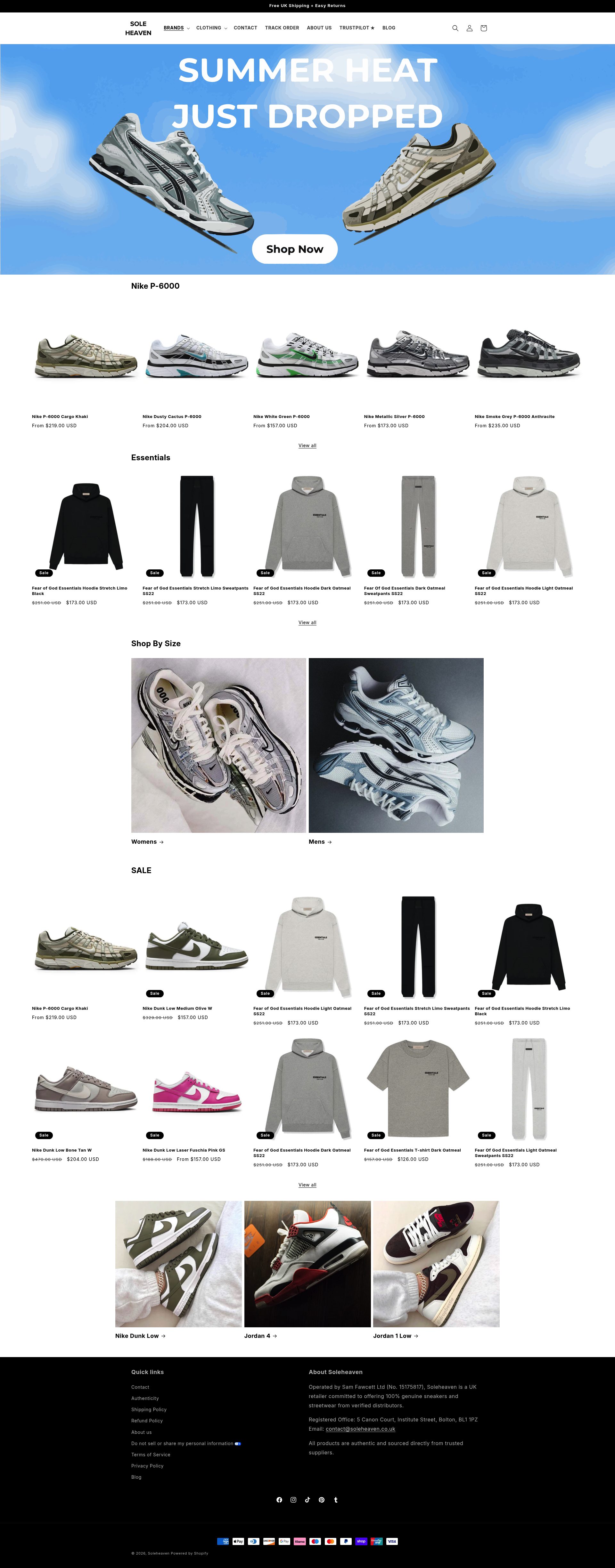
Soleheaven is a UK independent operating on Shopify that has built a strong following in the premium trainer and streetwear space. The store stocks a broad range of Nike, Jordan, adidas, and New Balance, with a particular focus on limited and exclusive pairs. The product page layout is clean: size options are displayed as a full grid rather than a dropdown, which reduces clicks and makes stock availability immediately legible at a glance. Filtering is straightforward and the mobile experience is well-optimised for the audience. As an independent, Soleheaven demonstrates that you don't need the budget of a global retailer to run a competitive Shopify storefront in the sneaker category, provided the fundamentals of photography, product information, and checkout are right.
10. size?
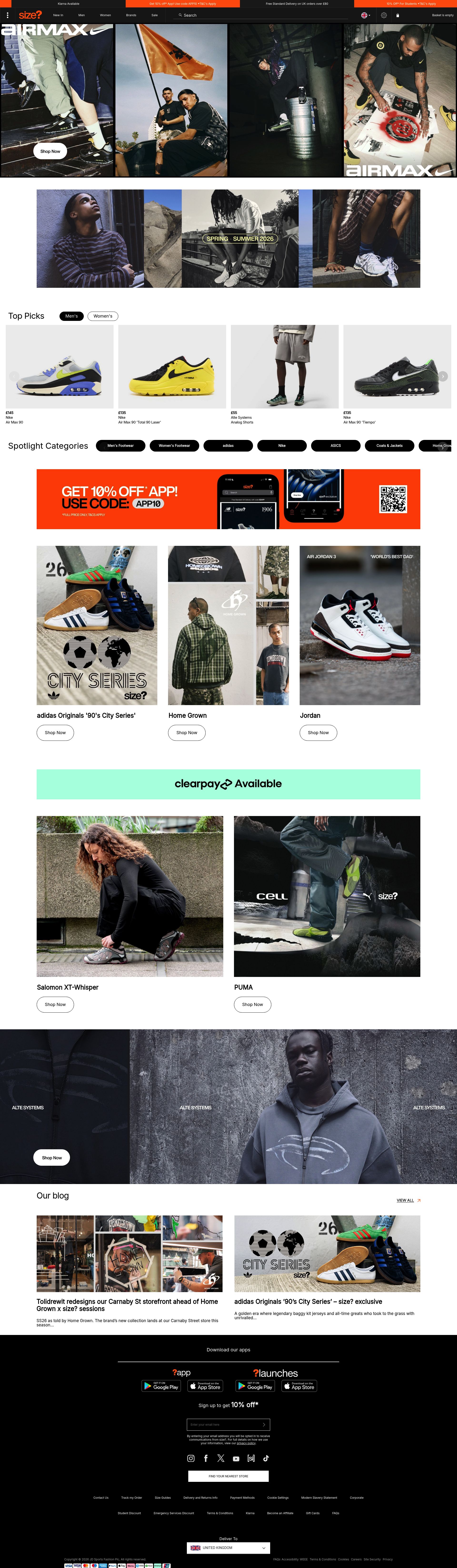
size? is one of the UK's most established specialist trainer retailers, with a heritage dating back to the late 1990s and a Shopify store that has consistently kept pace with the demands of its audience. The product range spans Nike, Jordan, adidas, New Balance, Vans, and Converse, with a reliable stream of exclusives tied to size?'s long-standing brand relationships. The storefront handles UK and EU sizing clearly, and launch pages are structured to give customers the information they need before a release without generating confusion about process. The wishlist and account functionality encourage repeat visits and registered customers are better placed to access high-demand releases. For UK sneaker buyers, size? remains a dependable first stop.
A few commercial patterns are consistent across all ten stores, and they're worth paying attention to if you're running a footwear brand on Shopify.
Size selector UX is treated as a conversion lever, not an afterthought. The best performers display size availability as a full visual grid, surface out-of-stock sizes clearly rather than hiding them, and show both UK and EU sizing where relevant. Footwear has one of the highest return rates in ecommerce: stores that reduce size uncertainty at the point of selection see meaningful improvements in both conversion and post-purchase satisfaction.
Product photography is always multiple-angle, on clean backgrounds, with lifestyle shots used to add context rather than replace detail. Customers buying trainers online need to see the sole, the profile, the toe box, and the heel. Stores that deliver this reduce reliance on returns and increase buyer confidence at the most critical point in the purchase journey.
Drop mechanics are integrated directly into the storefront rather than delegated entirely to email. Launch calendar pages, confirmed interest lists, countdown timers, and queue management are all handled within Shopify Plus, which means the experience is consistent and the brand controls the moment of high demand rather than losing it to third-party platforms.
Trust signals appear in the purchase journey rather than the footer. Authentication guarantees, returns policies, buyer protection, and review scores are visible on product pages, not buried in small print. This is particularly critical for premium and limited pairs where buyers are spending £150 to £500 or more and need reassurance before they commit.
If your footwear or fashion brand is ready to improve conversion or overall Shopify experience, our Shopify design service is built around exactly these kinds of commercial outcomes. Get in touch to talk through what your store needs.
Frequently asked questions
Which sneaker stores run on Shopify?
Kith, Footpatrol, Asphaltgold, Wethenew, CARIUMA, Sneakersnstuff, Kick Game, END Clothing, Soleheaven, and size? all run on Shopify or Shopify Plus. Shopify Plus is particularly dominant among high-volume sneaker retailers because of its ability to handle demand spikes during limited drops without degrading the purchase experience.
How do the best sneaker Shopify stores handle limited drops?
The top stores integrate drop mechanics directly into the storefront rather than relying solely on email. Kith uses editorial landing pages and coordinated storefront changes for each release. Sneakersnstuff offers confirmed interest lists so customers can register before stock goes live. END Clothing uses a queue system and scheduled email alerts. The common thread is that scarcity is managed within Shopify Plus, keeping the brand in control of the high-demand moment.
What makes a good sneaker product page on Shopify?
The best sneaker product pages show size availability as a full visual grid rather than a dropdown, display both UK and EU sizing, and use multiple-angle photography including the sole, profile, toe box, and heel. Trust signals like authentication guarantees and returns policies appear on the product page itself, not buried in the footer. Footwear has one of the highest return rates in ecommerce, so reducing size uncertainty at the point of selection is the single highest-leverage conversion improvement available.
Is Shopify Plus worth it for a sneaker or footwear brand?
For brands running limited releases or handling traffic spikes during drops, Shopify Plus is worth the cost. The platform handles high-concurrency checkout without performance degradation, integrates directly with tools like Klaviyo for pre-release email flows, and supports custom queue and waitlist functionality. CARIUMA scaled at 20 to 30 percent month-on-month revenue growth on a well-built Shopify setup, and Kith and END Clothing both rely on Plus for their drop infrastructure.
What should a UK sneaker store prioritise on its Shopify product pages?
UK sneaker stores should display both UK and EU sizing clearly, surface out-of-stock sizes visibly rather than hiding them, and place trust signals like Trustpilot scores and authentication guarantees within the product page rather than in footer links. size?, Footpatrol, and Kick Game all handle this well. Given that a significant share of UK sneaker buyers are on mobile when drops go live, mobile checkout speed and a clean size selector are non-negotiable.