

Quick summary
Bombas sets the benchmark for gifting infrastructure and mission-driven conversion, with a bulk corporate gifting channel that generates revenue independently of its main catalogue. London Sock Company runs the most complete subscription gifting flow in UK ecommerce, letting recipients manage their own size and address so gift subscriptions actually stick. Darn Tough makes a lifetime guarantee the centrepiece of its product pages, turning a bold commercial commitment into the strongest conversion lever on the site. Sock It To Me proves that a personality-led novelty brand can scale on Shopify when the collection architecture mirrors how a gift buyer actually thinks.
Socks are one of the most repeat-purchased, gift-friendly and subscription-ready product categories in ecommerce. The brands doing it well on Shopify have moved well beyond a basic catalogue, building stores where gifting flows, subscription mechanics, material filtering and loyalty programmes do real commercial work. Here are ten worth studying.
1. Bombas
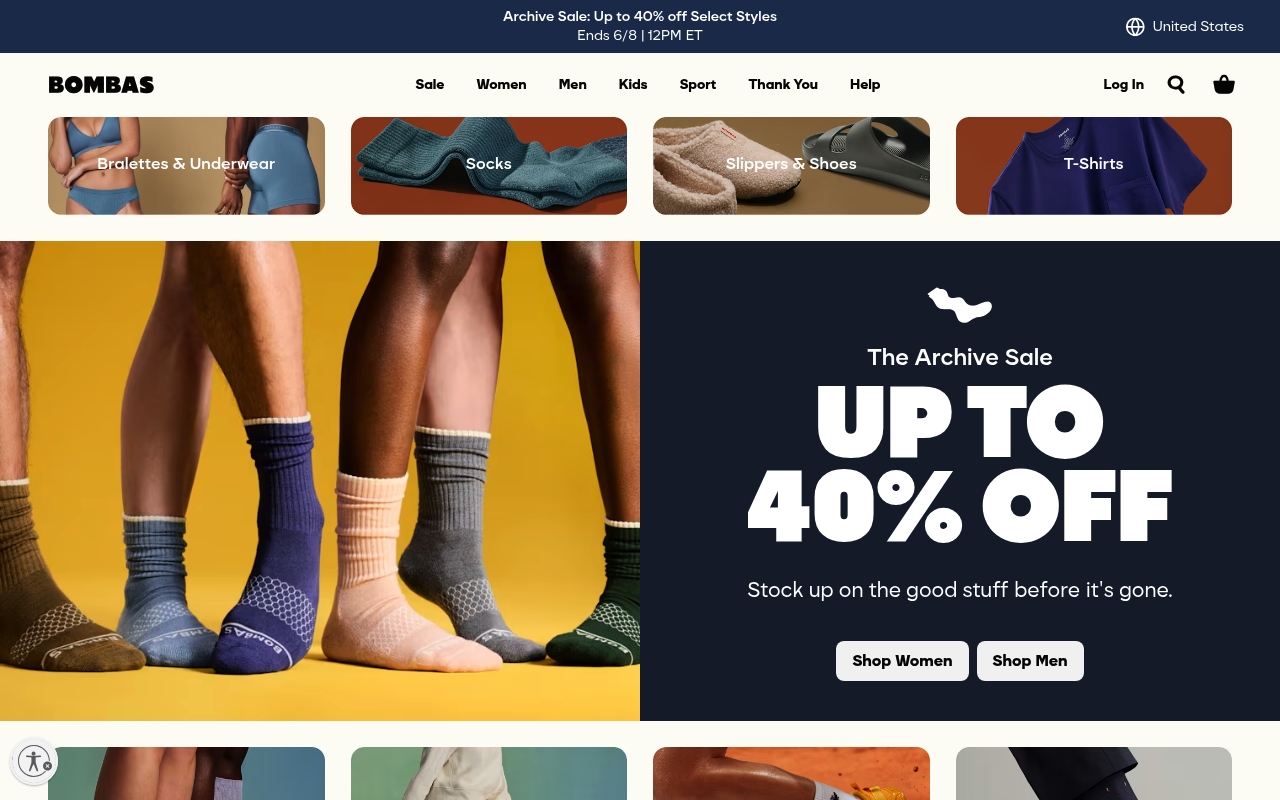
Bombas is one of the most studied DTC sock brands on Shopify Plus, having migrated to the platform and grown to over $17 million in first-year post-migration sales. The store is built around two mechanics that reinforce each other: a bulk gifting programme with tiered discounts (including a dedicated corporate gifting page), and a one-for-one donation model that is woven into the product page experience rather than buried in the footer. Every product listing makes the social mission visible without it interrupting the buying journey. Add-to-cart flows are clean, bundle-and-save options are prominent, and the checkout is fast. If you sell a product with a strong brand story, Bombas is the benchmark for how to make that story a conversion asset rather than just a marketing one.
What to take from it: Gifting infrastructure deserves the same build investment as the main product catalogue. Bombas's bulk gifting flow is a dedicated revenue channel, not an afterthought.
2. Stance
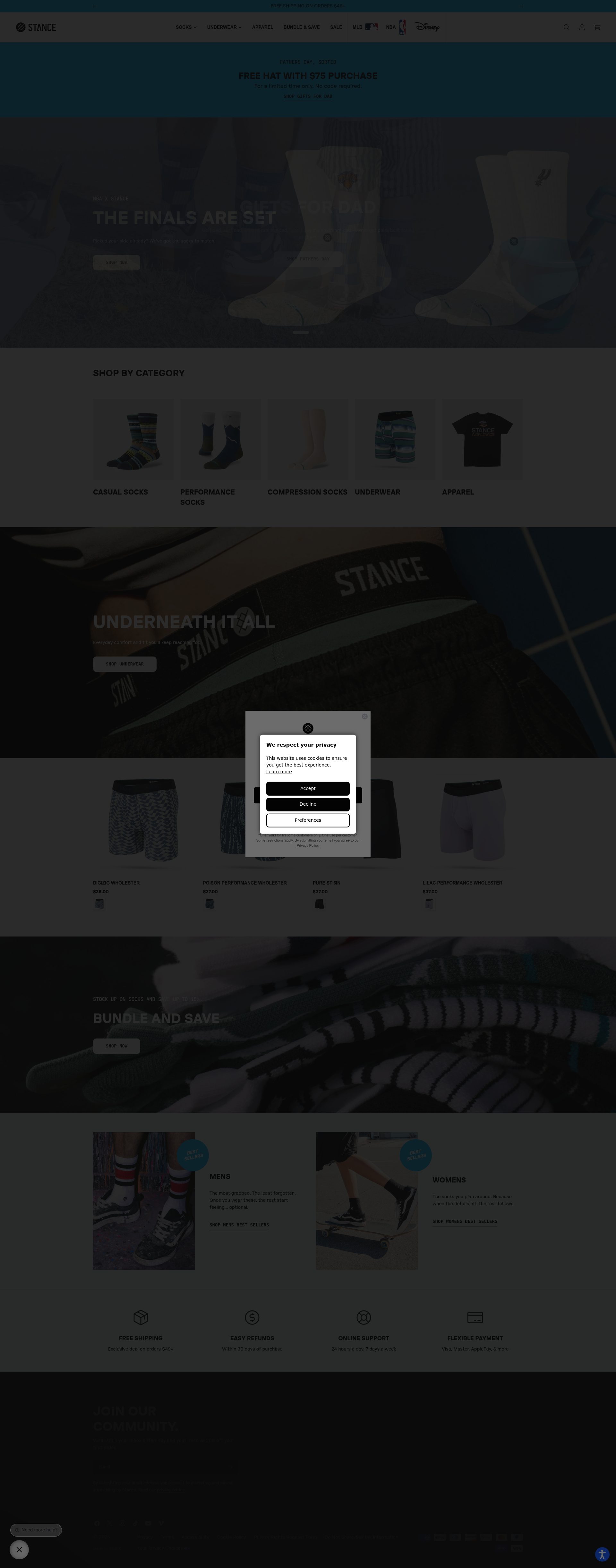
Stance runs a custom Shopify theme built to handle a wide product range spanning lifestyle socks, performance athletic socks, underwear and collaborations with artists and athletes. The store handles product discovery well: filtering by activity (running, basketball, hiking, everyday) sits alongside filtering by material and cushioning level, which is exactly what a technically-minded buyer needs. Bundle-and-save mechanics are prominent on collection pages, and the brand uses Klaviyo for post-purchase and replenishment flows. Stance's athlete and artist collaboration pages also function as content-led product discovery, pulling editorial content and product listings into a single page. For brands with a wide SKU range, Stance shows how to use collection architecture to serve both casual browsers and repeat buyers who know exactly what they want.
What to take from it: Activity and material filtering cuts friction for performance buyers. If your socks serve multiple use cases, your navigation should reflect that.
3. London Sock Company
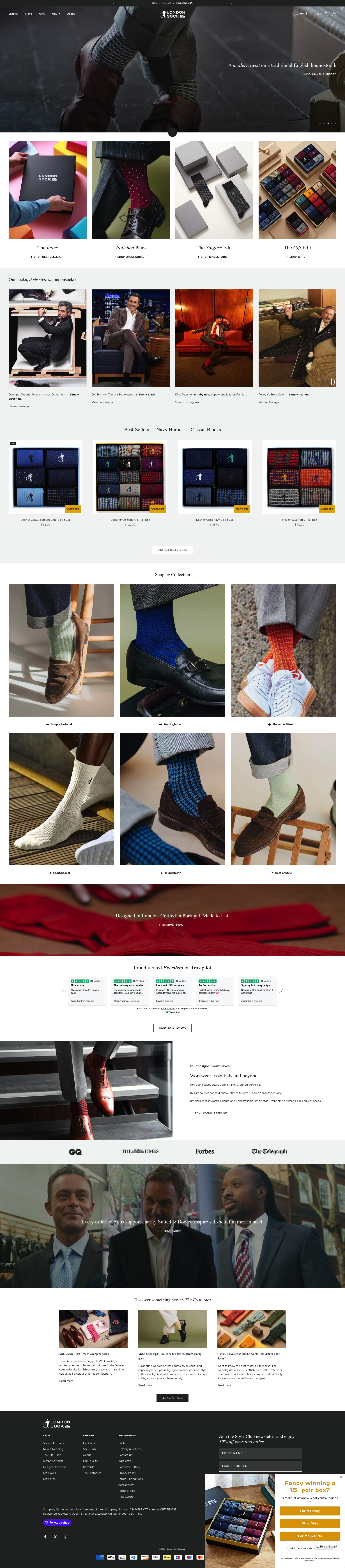
London Sock Company has built one of the more complete gifting and subscription setups you will find in UK ecommerce. Their Sock Club subscription lets buyers choose 1, 2 or 3 pairs per month at fixed price points (£10, £18 and £25), and the gift subscription flow is particularly well designed: the recipient activates their own subscription, selects their own size and confirms their delivery address, which removes the biggest friction point in gifted subscriptions. Corporate gifting is handled through a separate, dedicated channel. One-year quality guarantees and a 28-day return window are stated clearly throughout the checkout journey. The store also does well with last-minute gifting by offering instant digital certificate delivery. For UK fashion brands, this is the reference point for subscription gifting done properly.
What to take from it: A gifted subscription that lets the recipient manage their own preferences removes the most common reason gift subscriptions get cancelled. Build that into the flow from day one.
4. Corgi Socks
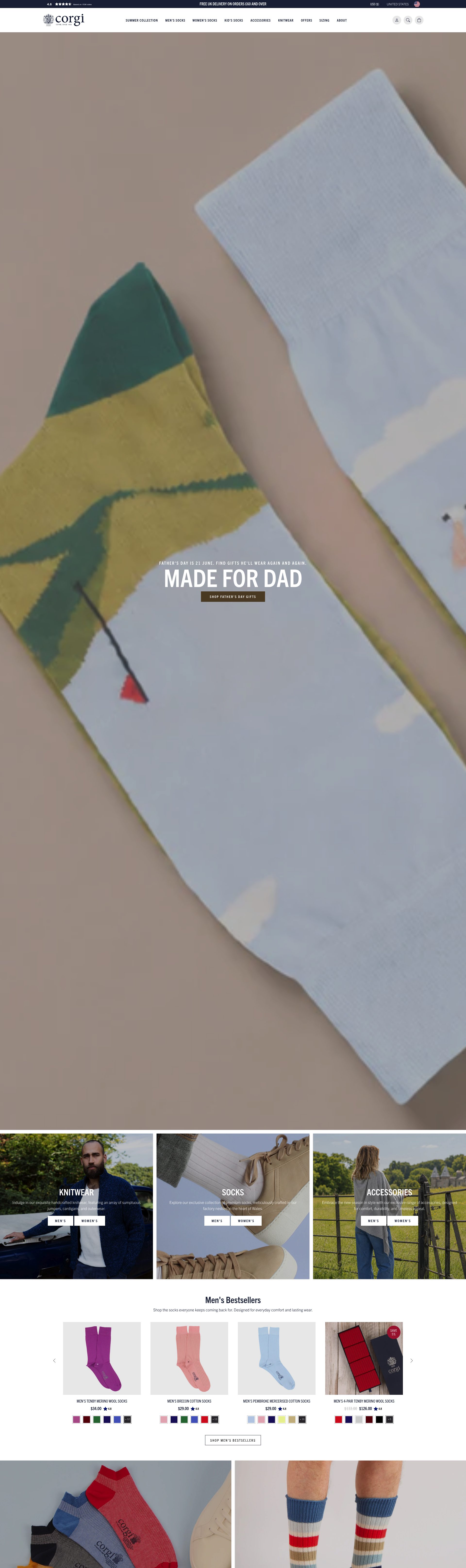
Corgi Socks has been making luxury socks and knitwear in Wales since 1892, and the Shopify store does justice to that heritage without becoming stuffy. The store holds a Royal Warrant from HM The King, which is displayed appropriately on product pages and in brand messaging. The product range centres on merino wool socks made in the Corgi factory in Wales, and the store uses material-led filtering (merino wool, cashmere, cotton) alongside occasion-based collections. International markets are handled through a separate US storefront (us.corgisocks.com), demonstrating a clean multi-market Shopify setup without requiring a complex markets implementation. Packaging as brand extension is a strong part of the Corgi proposition, with gift-ready presentation built into the standard product offer.
What to take from it: If heritage and provenance are central to your brand, your product pages need to carry that story at the point of purchase, not just on an About page.
5. Heat Holders
Heat Holders is a confirmed Shopify merchant and a long-running Shopify case study. The brand created the thermal sock category in the UK, with socks rated at over seven times the warmth of regular cotton socks, and their Shopify store is built around making that performance claim credible and easy to navigate. TOG ratings are displayed on product listings, allowing buyers to compare warmth levels across the Original, Lite and Ultra Lite ranges. The size and gender navigation is straightforward, and the store makes strong use of reviews to reinforce the product's functional promises. Heat Holders also sells through major UK retailers, and their DTC store handles the complexity of a brand that operates in both wholesale and direct channels without the product listings becoming cluttered. For brands selling a technical product, the Heat Holders approach to surfacing performance data on the product page is worth replicating.
What to take from it: If your product has a measurable performance advantage, make that number visible and specific on every product listing. "Over 7x warmer than regular cotton socks" does more commercial work than any lifestyle image.
6. Thought Socks
Thought Socks (thoughtsocks.com) is a Shopify store built around sustainable materials, and it handles the environmental story without the self-righteous tone that can make sustainable fashion brands feel like a lecture. The range covers bamboo, organic cotton, hemp and wool socks for men, women and children, with collection pages filtered by both material and occasion. GOTS and Fairtrade certifications are surfaced on product pages alongside material composition details, which matters to their audience. The store runs separate UK and US storefronts and the international routing is handled smoothly. Thought has been operating since 1995, and the brand's longevity lends credibility to the sustainability messaging in a way that newer brands often struggle to match.
What to take from it: Certification logos (GOTS, Fairtrade, B Corp) earn more trust on product pages than they do in footers. Place them where the purchase decision is being made.
7. Darn Tough Vermont
Darn Tough (darntough.com) runs on Shopify and sells one of the more commercially unusual propositions in the sock market: a lifetime guarantee. Every pair of Darn Tough socks is backed by an unconditional lifetime guarantee — if they wear out, the brand replaces them for free. The store makes that guarantee the centrepiece of its product positioning, and the build quality story (all socks are knitted in Vermont using fine-gauge merino wool) supports the premium price point. The performance range covers running, hiking, cycling, ski and everyday wear, with detailed filtering by activity, cushioning level and height. For merchants selling a product with a genuine quality story, Darn Tough is the clearest example of how a warranty or guarantee can function as a primary conversion lever rather than a risk mitigation footnote.
What to take from it: A lifetime guarantee is a bold commercial commitment, but when the product genuinely supports it, the guarantee becomes the most persuasive thing on the page. If you can offer a meaningful guarantee, make it the headline.
8. Sock Club
Sock Club (sockclub.com) runs its ecommerce operation through a Shopify store and has built its business on a straightforward premise: a monthly sock subscription using socks made from US-grown cotton, knitted in the United States. The subscription mechanic is simple, which is intentional. Buyers pick a subscription, socks arrive every month, and the entire flow from sign-up to renewal is built to minimise friction. The store handles both individual and corporate subscriptions, and the corporate gifting page is well structured for B2B buyers who want to set up and forget about it. The focus on domestic manufacturing (80% US-grown combed cotton, 16% nylon, 4% Lycra) is a clear differentiator for buyers who care about supply chain, and the store surfaces that story without letting it slow down the purchase flow.
What to take from it: For subscription products, simplicity in the sign-up flow matters more than feature richness. Sock Club's conversion rate benefits from the fact that there are very few decisions to make.
9. Sock It To Me
Sock It To Me (sockittome.com) is a woman-owned novelty sock brand founded in Portland in 2004, and it is a strong example of how a personality-led brand scales on Shopify. The store carries themed collections built around characters, animals, food, space, pop culture and more, and the collection architecture reflects that breadth without making the product range feel chaotic. Gift-buying is a primary use case for novelty socks, and the store handles it well with clearly badged gift-ready packaging and category browsing by theme. The brand topped $10 million in sales in 2016 and has continued to grow its international distribution. For brands in the novelty or fun gift space, Sock It To Me shows how to build a Shopify store where the personality of the product range comes through in the navigation and collection structure, not just the imagery.
What to take from it: For gift-oriented products, your collection structure should mirror how a gift buyer thinks: by occasion, theme or recipient, not just by product type.
10. Awesome Socks Club
The Awesome Socks Club (good.store) is a monthly sock subscription where 100% of profits go towards building the Maternal Center of Excellence in Sierra Leone. The store runs on Shopify and the purchase model is built around impact. Each month, a new independent artist designs the sock, and subscribers receive a pair at their door alongside the story of the artist and the charity progress. The subscription is available on a monthly recurring basis or as prepaid 6-month and 12-month options, making it a strong gifting product as well as a personal subscription. With over 30,000 subscribers, the Awesome Socks Club demonstrates that a charitable mission, when it is made genuinely central to the product experience rather than a badge in the checkout, can build a loyal subscriber base that competitors with a purely commercial proposition cannot easily displace.
What to take from it: A charitable purchase mechanic needs to be specific, measurable and visible throughout the store to drive conversion. "100% of profits go to X" with a clear progress tracker is more persuasive than a vague giving pledge.
If your accessories or fashion brand is ready to improve conversion or overall Shopify experience, our Shopify design service is built around exactly these kinds of commercial outcomes. Get in touch to talk through what your store needs.
Frequently asked questions
Which Shopify sock stores have the best subscription models?
London Sock Company and Sock Club are the strongest examples. London Sock Company lets gift subscription recipients activate their own account, choose their size and confirm their address, removing the main reason gifted subscriptions get cancelled. Sock Club keeps individual sign-up deliberately simple, with minimal decisions at checkout, which directly improves conversion.
What makes Bombas so successful on Shopify?
Bombas combines a one-for-one donation model with a properly built corporate gifting channel that functions as a separate revenue stream. The social mission is placed on product pages rather than buried in the footer, making it a conversion asset. The bulk gifting flow has tiered discounts and a dedicated page, which treats B2B buyers as a distinct segment rather than an afterthought.
Are there any UK socks brands selling on Shopify?
Yes — London Sock Company, Corgi Socks, Heat Holders and Thought Socks are all UK-based Shopify merchants. London Sock Company and Corgi Socks are strong references for premium gifting and heritage positioning. Heat Holders is a good example of surfacing a specific performance claim (TOG ratings) directly on product listings.
How do the best socks Shopify stores handle product filtering?
The strongest stores filter by activity, material and cushioning rather than just size and colour. Stance filters by sport (running, basketball, hiking) alongside material and cushioning level. Darn Tough filters by activity, cushioning and height. Heat Holders surfaces TOG warmth ratings on listings. All three make it easier for a buyer with a specific use case to find the right product without browsing the entire catalogue.
What conversion tactics from socks stores work for other Shopify merchants?
Three tactics stand out across this list. First, make performance claims specific and numerical — Heat Holders' "7x warmer than regular cotton socks" outperforms any lifestyle image. Second, structure gifting as a proper revenue channel with dedicated collection pages, bundle-and-save offers and clear last-minute options. Third, if you have a meaningful guarantee, lead with it on the product page rather than burying it in the footer — Darn Tough's lifetime guarantee is the most persuasive element on their listings.