
Quick summary
Cazcabel leads the list with tight brand storytelling, award citations on every product page, and a cocktail blog that cross-links directly to the relevant expression rather than sitting as a separate editorial silo. Tequila Ocho is the strongest pick for content-driven ecommerce: single-estate product pages with named ranchos and harvest years justify a premium price and build a repeat buyer habit. Mijenta's Shopify Plus rebuild by Netalico shows what properly engineered spirits ecommerce looks like, with searchable recipe content and bundle products that lift AOV without discounting. Volcán de mi Tierra, the LVMH-backed entry, sets the benchmark for production quality with full-screen video, a concise five-SKU range, and product pages that earn the £50 to £150 price point.
Tequila is one of the most interesting categories in DTC spirits. The products are visually distinctive, the brand storytelling goes deep, and the price ceiling is genuinely high, with ultra-premium bottles trading above £200. That combination rewards merchants who invest in their store: good photography, clear product navigation, and honest tasting notes convert browsers into buyers more consistently here than in almost any other drinks niche. The stores below all run on Shopify and each makes at least one ecommerce decision worth copying.
1. Cazcabel
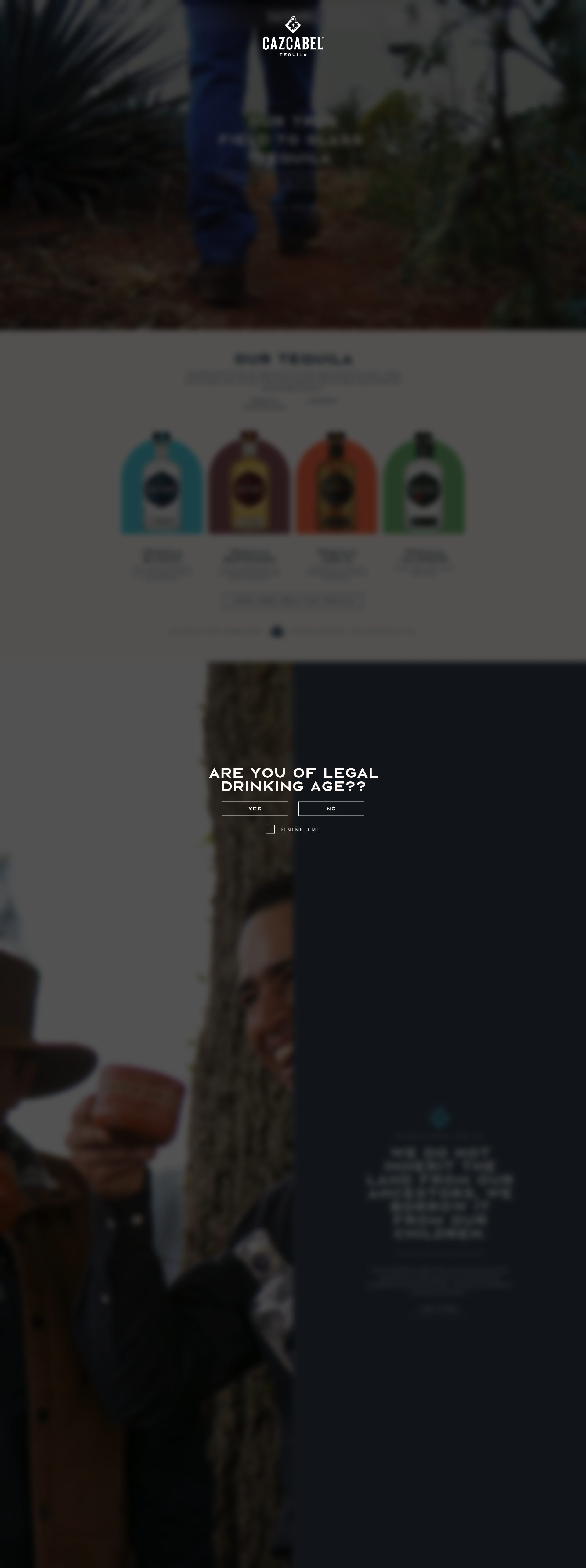
Cazcabel is a London-registered, family-run brand from Jalisco that runs its DTC store on Shopify at cazcabel.com. The navigation is clean and deliberately minimal: Tequilas, Cocktails, Our Story, Buy Online. That last link takes customers to a retailer locator rather than a cart, which is the right call for a brand operating in a licensed-to-sell drinks environment. The product pages do the heavy lifting instead, pairing tasting notes with specific cocktail suggestions for each expression, so a customer landing on the Coffee Liqueur page leaves knowing exactly how to use it.
The "field to glass" messaging runs consistently through every page without becoming a marketing cliche. Cazcabel cites specific facts: four generations of agave farming, named sustainable practices at the Jalisco estate, Gold and Master awards at the World Spirits Awards. That specificity builds product page credibility far more effectively than generic "premium quality" copy. The photography uses warm amber tones throughout, which keeps brand cohesion tight across the product range from Blanco through to Jalapeño.
The cocktail blog is a genuine conversion tool. Rather than sitting in a separate editorial silo, recipes are cross-linked from individual product pages. A customer browsing the Reposado can click straight to three cocktail suggestions that use that expression. This is a clean internal linking strategy that increases dwell time and softens the ask for a first-time buyer.
2. Los Sundays

Los Sundays (lossundays.com) positions itself as a lifestyle brand that also makes tequila, and the Shopify store reflects that order of priority. The homepage leads with apparel, events, and visual identity before it leads with bottles. That is an unusual approach for a spirits brand, but it works here because the target customer is buying into the aesthetic, not just the liquid.
The product range sits across two categories: Tequila and Merch. The tequila collection keeps SKU count tight, with Blanco, Reposado, Coconut, and Jalapeño expressions. Prices sit in the $36 to $46 range, which positions Los Sundays as accessible premium rather than collector territory. That pricing communicates clearly on the product pages without needing a lengthy explanation.
What Los Sundays does well from an ecommerce standpoint is social proof integration. The brand has a strong Instagram presence and the website pulls that visual language directly into the product grid. The effect is a store that feels more like a brand discovery experience than a checkout funnel. For a DTC tequila brand competing against retail shelf placement, that kind of awareness-building on site is a genuine retention mechanism.
3. Mijenta
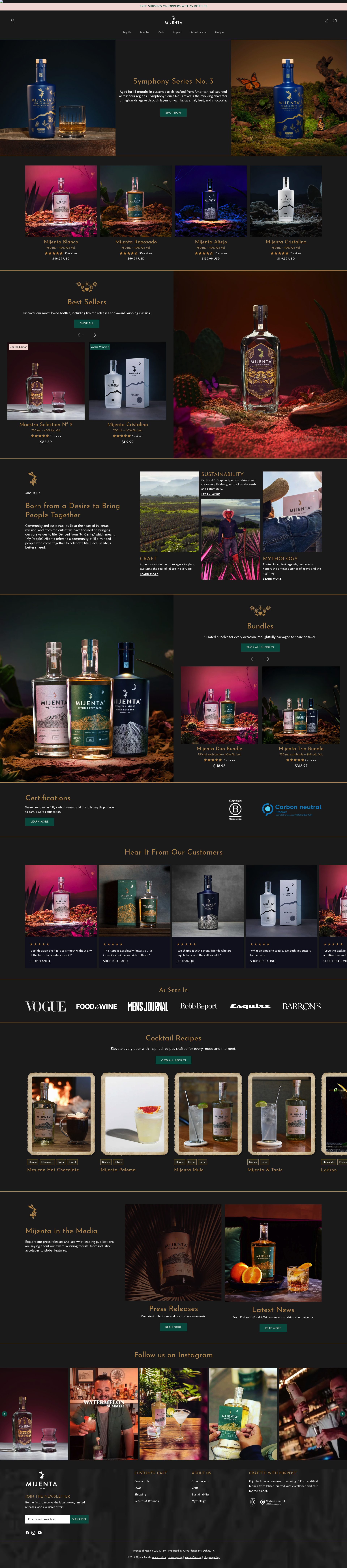
Mijenta (mijenta-tequila.com) had their Shopify store rebuilt by Netalico, a Shopify Plus partner agency, and the result shows what a properly engineered spirits store looks like. The key change from their previous setup was replacing a page builder with native Shopify sections and swapping their review system for Judge.me, which is a small decision that pays off in page speed and structured data for search.
The product pages are the most informative in this list. Each expression includes lifestyle photography, a full tasting note breakdown, ingredient sourcing details, and shipping information in a single scroll. The collection page adds alcohol volume and merchandising details to the product cards, which removes a click from the research process. Buyers can compare expressions from the grid without opening individual PDPs.
The cocktail recipe section is searchable by tequila type and flavour profile, which solves a real user problem for buyers who want to know what to do with a bottle of Cristalino before they commit to purchasing it. That kind of functional content design reduces purchase hesitation without resorting to discount prompts. Mijenta also offers a Full Bundle product, which bundles multiple expressions at a saving, a straightforward AOV play that works particularly well in the gifting window.
4. 818 Tequila

Kendall Jenner's 818 Tequila (drink818.com) is a case study in how celebrity DTC brands can run a Shopify store without letting the founder's profile do all the work. The product pages lead with the liquid: tasting notes, production method, agave source, and awards are all above the fold before any lifestyle photography appears. That discipline matters because it signals to tequila enthusiasts, the highest-value customer segment, that the brand takes the product seriously.
The store separates merchandise and tequila into different purchase journeys. shop.drink818.com handles branded apparel and accessories, while drink818.com handles tequila. Running two Shopify storefronts this way keeps each one focused, avoids category confusion in navigation, and allows separate email marketing flows for spirits buyers versus merch buyers.
Age verification is handled via a full-screen gate that applies across the store, which is standard for spirits DTC. The cocktail section ties each recipe back to a specific SKU with a direct link to the product page, reducing the steps between inspiration and purchase. The store locator is prominently surfaced in the main navigation, acknowledging that most US tequila sales still happen in physical retail even when the brand discovery happens online.
5. Código 1530
Código 1530 runs an official Shopify store at codigo1530shop.com, though the primary ecommerce function of this store is merchandise rather than tequila, because of US state licensing restrictions on direct spirits sales. That is a common structural decision for US spirits brands, and Código 1530 handles it well by making the store genuinely valuable on its own terms.
The product range includes artisan-made belt buckles crafted in Amatitán, Jalisco, branded barrelheads, golf gloves, cocktail shakers, and coasters. Pricing on the collectibles sits high enough to signal premium positioning without requiring the customer to have purchased a bottle first. The belt buckles in particular connect the brand narrative (George Strait as investor, country and western provenance) directly to a physical product that a customer can use.
The store navigation is clean and category-driven: Apparel, Gear, Hats, and a dedicated Apparel and Hats landing. There are no upsells into a complex product hierarchy. For a brand whose primary goal is DTC relationship-building rather than DTC tequila revenue, that simplicity is appropriate. The brand story is carried by the product descriptions, which consistently reference the Jalisco origin and the craft production process at a family distillery.
6. AsomBroso
AsomBroso runs their official purchasing site at exclusive-tequila.myshopify.com, which is still visible in the URL because the domain redirect has not been customised. That is a small trust signal issue that undermines an otherwise thoughtful store. The product range, however, is one of the most considered in the ultra-premium tequila segment on Shopify.
The store organises expressions into clear tiers: Ultra Premium, Super-Ultra Premium, and a dedicated Discount Packs collection. That tiering removes the cognitive load of comparing a £40 Blanco against an £800 eleven-year Extra Añejo in the same flat product grid. Customers self-select into a tier based on budget and occasion, which is good merchandising.
The bundle strategy is genuinely sophisticated. The Trinity Package, Barrel Master Pack, Tequila Masters Pack, and Complete Set all represent different entry points for a collector or gift-buyer, with the Complete Set (all nine 750ml expressions plus two hardwood humidor displays) sitting at over $4,900. That is a high-ticket product that requires detailed photography and copy to justify the price, and AsomBroso delivers both. There is also a "Pick Your Barrel Blend" private label option for the La Rosa Reposado, which is a personalisation mechanic that works well for corporate gifting.
7. Olmeca Altos
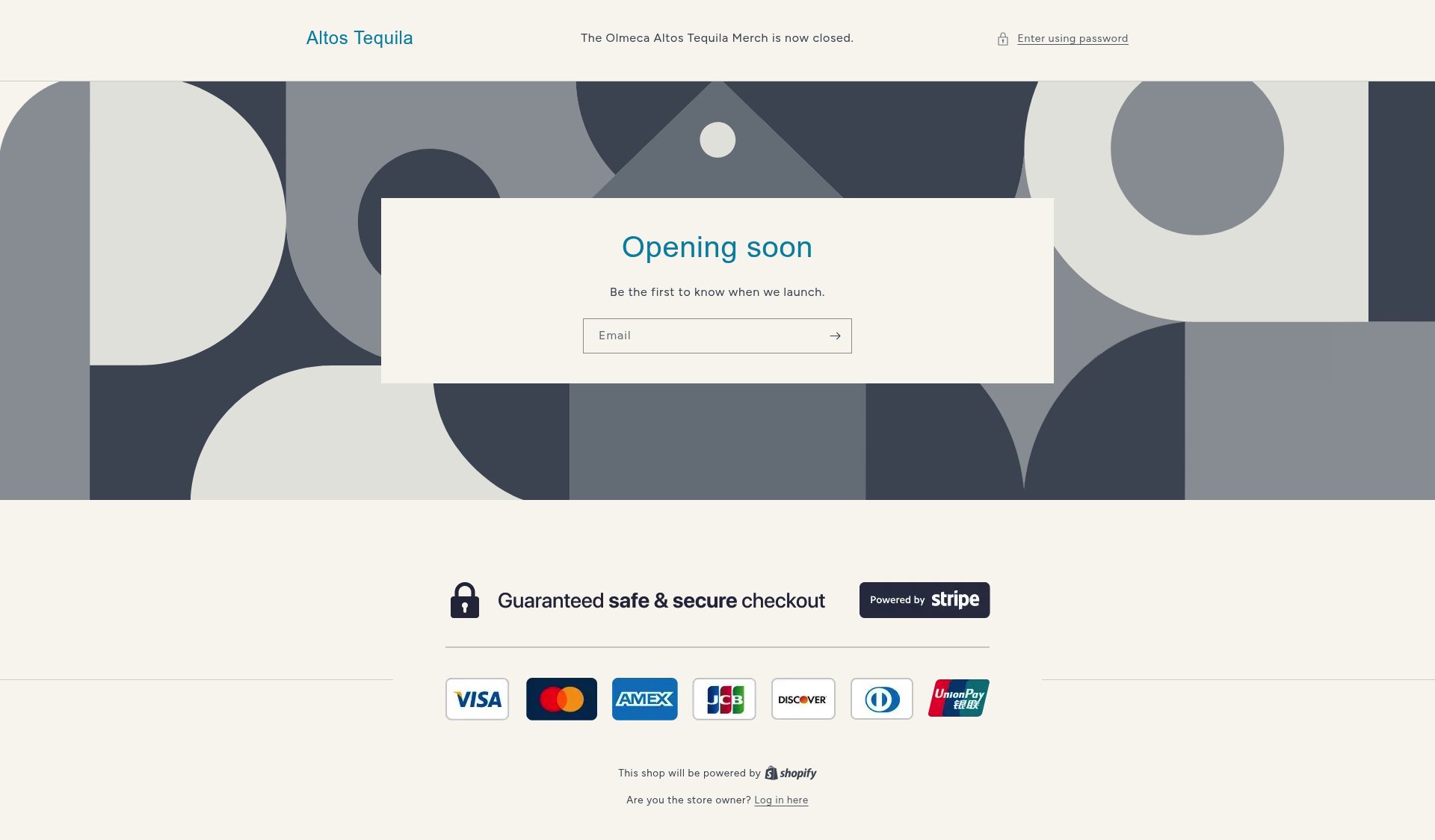
Olmeca Altos operates their Shopify store at shop.olmecaaltos.com under the branding "Altos Social Commerce," with the merchandise angle made explicit. Like Código 1530, the direct spirits sale is separated from the brand store, but Altos uses the merchandise channel more ambitiously as a sustainability communications platform.
Every product in the store is described as 100% made in Mexico, from the raw materials through to the workers producing each garment. That is not just brand storytelling: it functions as a sourcing and ethics signal that appeals to a specific customer who cares about supply chain transparency. Packaging uses recycled sources throughout, and that claim appears on product pages rather than being buried in a "sustainability" section that most customers never find.
Operationally, the store delivers within two to five days with USPS tracking sent on dispatch. Communicating that logistics detail clearly on product pages and at checkout removes a common objection for first-time buyers who are uncertain about delivery reliability from a brand-owned store versus a platform like Amazon.
8. Tequila Ocho
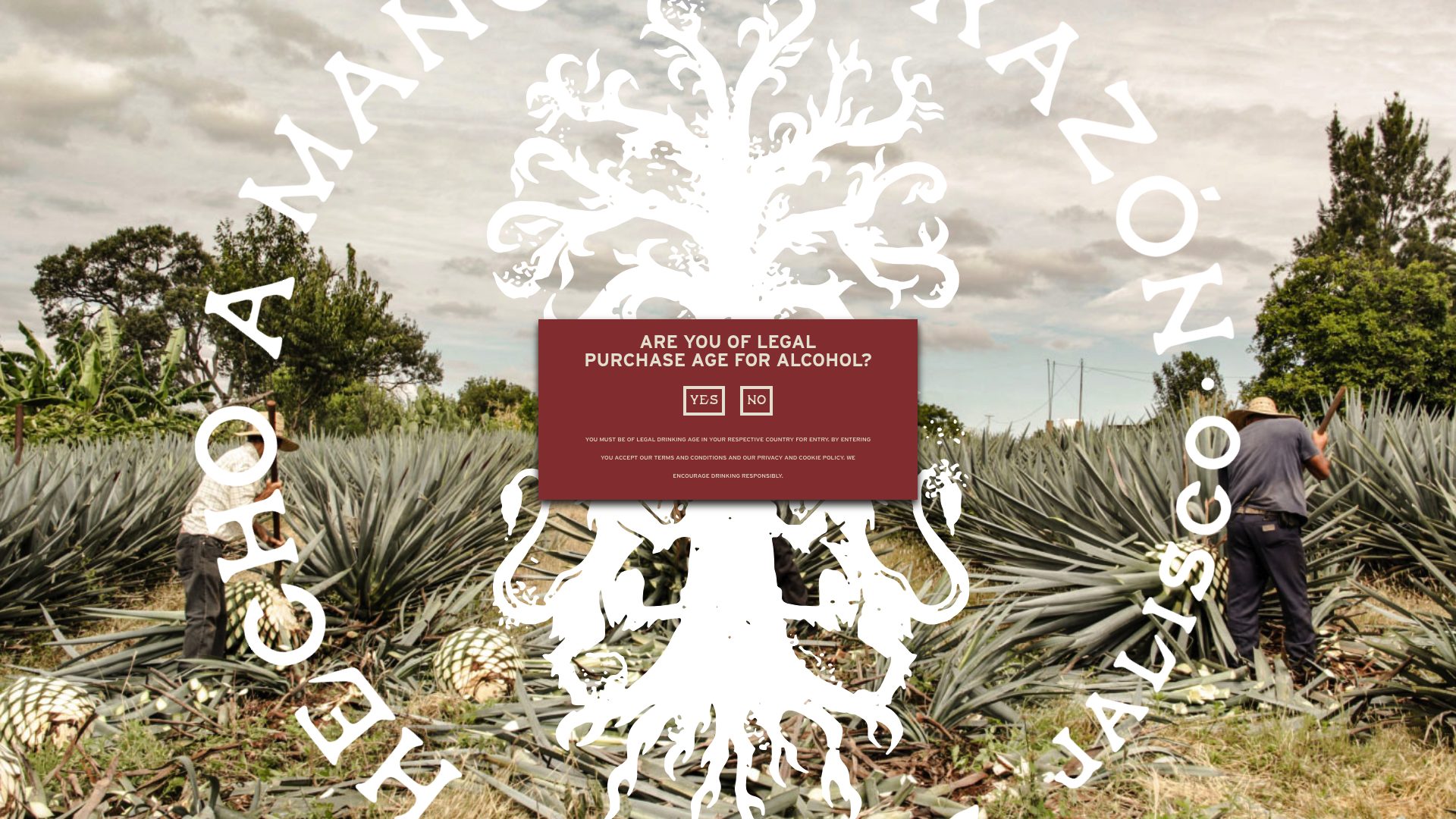
Tequila Ocho (ochotequila.com) is the most content-driven store in this list. The brand was the first to apply the concept of terroir to tequila, bottling single-estate expressions from named agave fields and releasing each harvest as a distinct product. That positioning requires an ecommerce experience that educates as much as it sells, and the Shopify store is built around that requirement.
The single-estate structure means individual product pages carry significant editorial weight. Each expression names the specific farm (rancho), the harvest year, and the specific characteristics that differentiate it from the previous vintage. That level of product page detail is not common in spirits DTC and it serves two conversion goals simultaneously: it justifies a higher price point and it builds a collector habit, because buyers who purchase one rancho will return for the next.
The navigation distinguishes between Blanco, Reposado, Añejo, and Extra Añejo, with a separate filter for single-estate versus standard expressions. That is sensible taxonomy for a range that spans both accessible everyday bottles and limited collector releases. The brand is additive-free, which is increasingly important to the tequila enthusiast segment, and that claim is made clearly on every product page.
9. Aplomo Tequila
Aplomo (aplomotequila.com) runs a Shopify store built around a clear brand origin story: founder Earnest Boyd was looking for a tequila that tasted genuinely different, traced a family connection to a distillery in Amatitan, Jalisco, and built the brand from there. That narrative specificity gives the product pages something concrete to anchor the copy to, rather than generic "craft" language.
The range covers Blanco, Reposado, and Añejo, priced for the accessible premium tier. Free shipping on orders over $100 is stated clearly, which is a standard DTC conversion lever but one that needs to be visible on the product page and at cart, not just in the header banner. Aplomo does this correctly, surfacing the threshold early in the purchase journey.
The Taste of Mexico section acts as an origin story for the product ingredients and production method, with enough specificity about the Amatitan terroir and the blue Weber agave growing conditions to give the copy credibility. That content does double duty as SEO fuel for informational queries around tequila production and as trust-building for a buyer who has landed on the product page via a paid search click.
10. Volcán de mi Tierra

Volcán de mi Tierra (volcan.com) is an LVMH brand and it shows in the production quality of the Shopify store. The homepage leads with full-screen video of the Tequila Volcano in Jalisco, setting the geographic origin story before a single bottle appears. That cinematic approach is a higher-cost production investment, but for a brand competing in the £50 to £150 per bottle range, it is the right place to spend.
The product range is deliberately concise: Blanco, Reposado, Cristalino, Blanco Tahona, and the X.A Extra Añejo. Each product page uses a consistent structure with tasting notes, production detail, and serve suggestions, which reduces the design and copy workload across the range while keeping the customer experience predictable. The Tahona expression gets specific product page content around the stone-wheel crushing method, which justifies the price premium without requiring a buyer to already know what Tahona means.
Navigation is clean with a clear distinction between expressions and a stockist locator that runs alongside the DTC product pages rather than replacing them. That approach acknowledges the reality of premium spirits distribution: most bottles move through trade, but the DTC store exists to support discovery, justify price points, and capture data on direct buyers.
If you are building or relaunching a Shopify store in the drinks or premium goods space, the teams at Sutton Commerce have the conversion and design experience to get it right. Get in touch to talk through your project.
Frequently asked questions
Can tequila brands sell directly to consumers on Shopify?
Yes, but with significant restrictions depending on the market. In the US, direct-to-consumer spirits sales are governed by individual state licensing laws, which means many US tequila brands use their Shopify store for merchandise rather than bottles, directing buyers to a retail locator instead. UK and EU brands face different licensing frameworks and some, like Cazcabel, use Shopify primarily for brand experience and wholesale enquiries rather than direct bottle sales.
What makes a tequila Shopify store convert well?
The highest-converting tequila stores do three things consistently: they lead product pages with tasting notes and production specifics rather than lifestyle imagery, they cross-link cocktail recipes directly to the relevant expression rather than keeping editorial content siloed, and they surface shipping thresholds and store locators early in the purchase journey. For ultra-premium expressions, detailed photography and bundle products that group multiple SKUs at a saving are the most reliable AOV levers.
How do premium tequila brands handle age verification on Shopify?
Most premium DTC spirits brands use a full-screen age gate that applies across the entire Shopify storefront before any product or content is accessible. This is standard practice for spirits DTC and is typically implemented via a Shopify app or custom theme section. The gate asks for date of birth or a simple yes/no confirmation of legal drinking age, and the response is stored in the session so the gate does not reappear on subsequent pages.
What is the typical price range for tequila sold DTC on Shopify?
DTC tequila pricing on Shopify spans a wide range. Accessible premium expressions like Los Sundays sit in the $36 to $46 range. Mid-tier craft brands like Aplomo and Tequila Ocho typically price between $45 and $85 per bottle. Ultra-premium and collector bottles from brands like AsomBroso can exceed $800 per expression, with complete collection sets priced above $4,900. Brands at the top end invest heavily in photography, product descriptions, and bundle mechanics to justify those price points without discounting.
Why do some tequila brands run separate Shopify stores for merchandise and spirits?
Separating merchandise and spirits into two Shopify storefronts keeps the purchase journey clean and allows different email marketing flows for each customer type. It also avoids the compliance headache of mixing age-gated spirits products with unrestricted apparel in a single checkout. Brands like 818 Tequila use this model: drink818.com handles bottles and product education, while a separate subdomain handles branded apparel and accessories.