
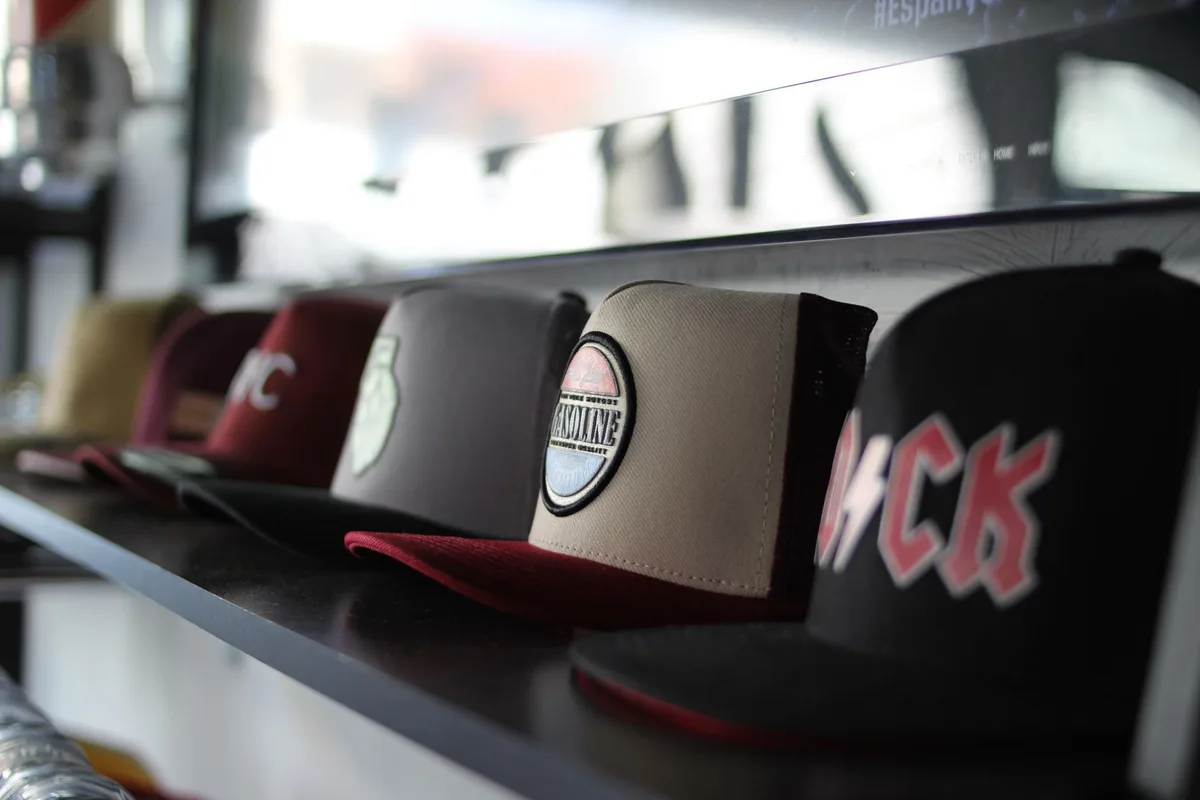
Quick summary
Brixton leads the category with the clearest product page specs in headwear: crown height, brim width, and material all structured for customers buying without trying. Lack of Color is the strongest DTC play, combining editorial photography with a try-before-you-buy mechanic that directly addresses fit uncertainty. Christys' London proves that a 240-year heritage brand can convert online when the manufacturing story is front and centre. Village Hat Shop stands out as a multi-brand retailer that uses guided selling — a face-shape-and-occasion advisor — to cut through a 200-brand catalogue without losing the customer.
Hats are a deceptively complex category to sell online. Sizing is non-standard, fit is hard to judge from a photo, and the range of sub-categories, from structured snapbacks to floppy straw hats, means the same store can be serving a festival-goer and a City commuter. The brands that convert best here have solved the information gap at the product page level and built clear navigation that does not punish customers for not knowing exactly what they want. Here are ten that do it well.
1. Brixton
Brixton is a California-based lifestyle brand that built its reputation on structured felt hats and grew into a full headwear and apparel range on Shopify Plus. Their product pages are among the clearest in the hat category: crown height, brim width, and material are all listed in a structured spec block, which is essential when a customer is choosing between a medium-brim and a wide-brim without being able to try the product on. The detail removes the hesitation that leads to an abandoned cart.
Collection pages are filtered by style (fedora, baseball, bucket, beanie) and by fit (fitted, adjustable, stretch), giving customers two parallel routes to the right product. That dual filtering approach is smart: it accommodates both customers who know the hat name they want and those who know only the fit type they prefer. Brixton's limited-edition drops are surfaced on the homepage with clear stock counters, which creates urgency without manufactured scarcity.
2. Lack of Color
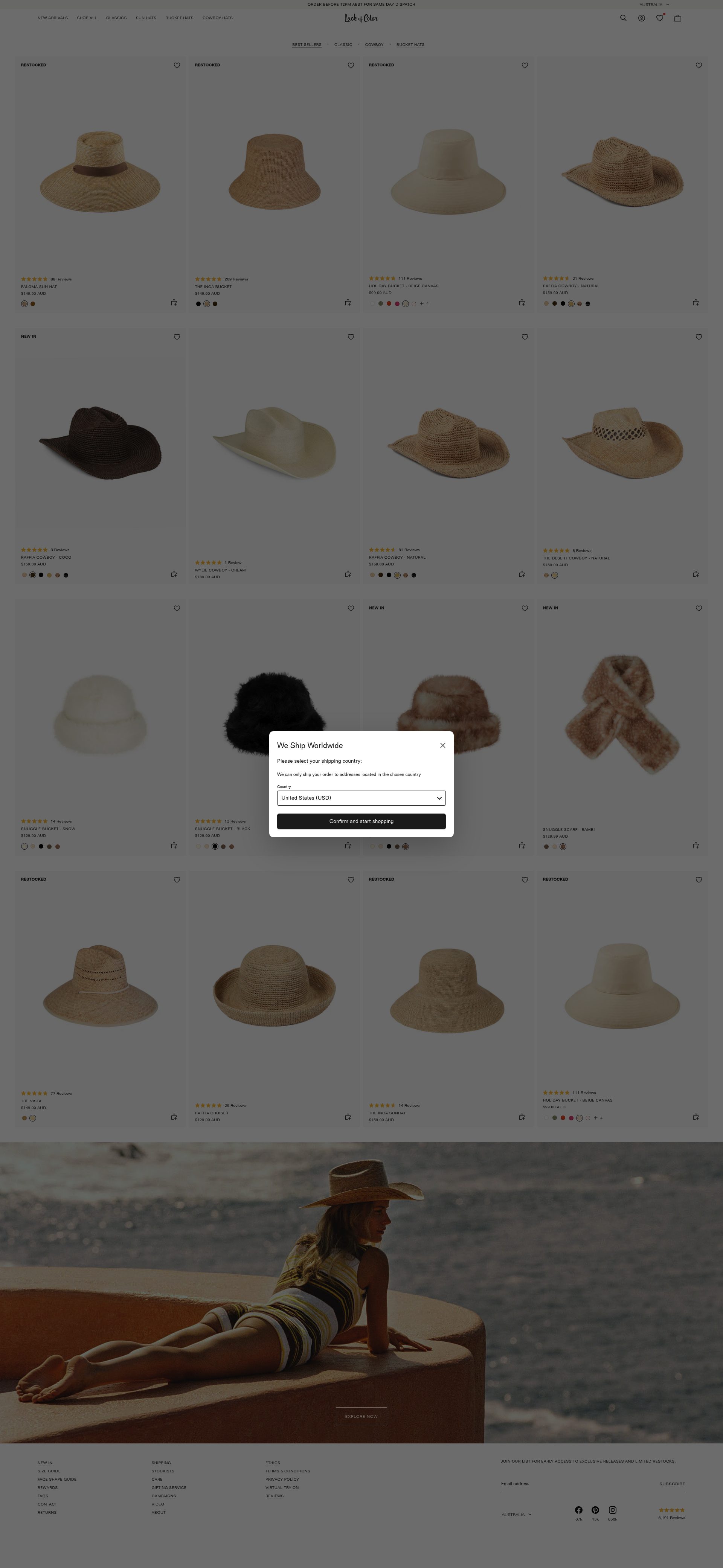
Lack of Color is an Australian DTC hat brand that has built one of the strongest visual identities in the category. Their Shopify store treats the homepage as a lookbook: editorial photography showing hats in context, across occasions, rather than flat lays. This works for a brand where the purchase decision is heavily aesthetic and customers need to see how a hat looks worn, not just what it looks like in isolation.
The product pages carry a "Style it with" section that cross-sells complementary pieces from their accessories range, contributing to a higher AOV. Their hat care guide is embedded at the bottom of every product page, which reduces post-purchase regret and returns on felt and straw styles that are easily damaged. Lack of Color also uses a "try before you buy" messaging on selected styles, surfaced clearly on the PDP, which directly lowers the risk barrier for a category where fit uncertainty is the primary objection.
3. Christys' London
Christys' London is a 240-year-old British hatter that has built a modern DTC store on Shopify without losing any of its heritage positioning. Their product pages lead with craft narrative: hat-making provenance, blocking techniques, and materials sourced from British mills are woven into copy that educates before it sells. For a brand selling felt and wool hats at £80 to £250, the manufacturing story is the conversion argument.
The store handles the complexity of formal and casual ranges in the same catalogue by separating collections clearly: race day, country, everyday, and corporate are the top-level navigation categories. That occasion-based structure routes customers to a relevant shortlist rather than the full 200-SKU catalogue. The gift messaging on the site is strong, with gift wrap and personalised hatbox options surfaced prominently from November through to January.
4. Stetson
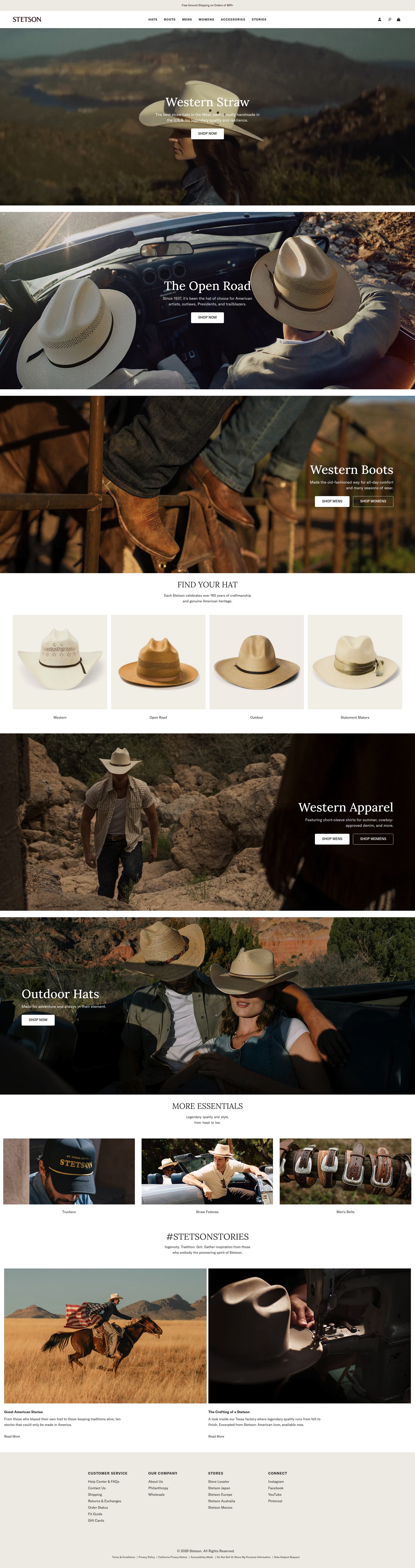
Stetson's Shopify store manages a catalogue that spans western hats, fedoras, caps, and accessories across a wide price range, and the navigation architecture is what holds it together. Style-based mega-menus separate "western", "outdoor", "dress", and "casual" with thumbnail imagery directly in the dropdown, which reduces the cognitive load of arriving at a broad category page and having to filter from scratch. The visual navigation cue is the right call for a product where shape is the primary differentiator.
Product pages carry Stetson's sizing system clearly: hat sizing in both inches and centimetres with a measurement guide linked directly from the size selector. That is a basic requirement for a hat store that is easy to get wrong, and Stetson gets it right. Their "Boss of the Plains" heritage narrative is used selectively on key collection pages without being pushed onto every PDP, which means the brand story adds context without slowing down the purchase flow.
5. Tilley
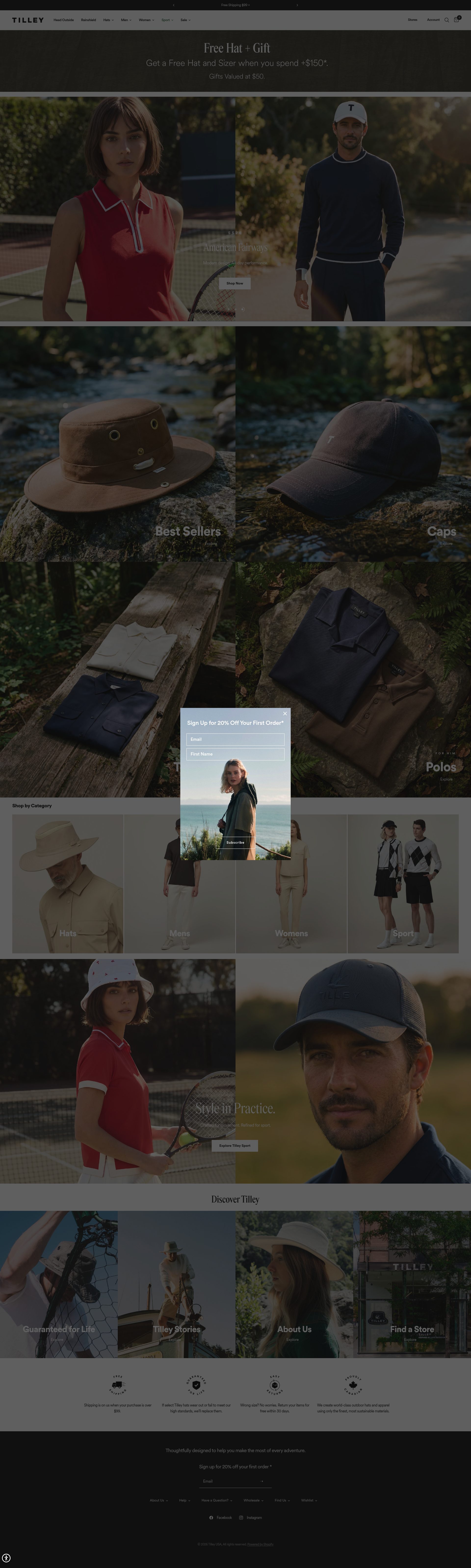
Tilley sells outdoor and travel hats with a lifetime guarantee, and their Shopify store is built around justifying that guarantee at every stage of the purchase funnel. The homepage leads with the guarantee proposition rather than a promotional offer, which is the right choice for a brand where the average order value sits above £60 and the repeat purchase cycle is measured in years. A customer who buys a Tilley hat once should stay a customer for decades, and the store's messaging reflects that long-term orientation.
Product pages carry UV protection ratings (UPF 50+ on most styles), water-resistance specifications, and packability data for travel-oriented styles. These are the functional credentials a practical buyer needs to see. The "Adventures" editorial section on the site acts as social proof at scale: customer stories from expeditions and travels reinforce the durability claim better than any product copy could.
6. Barts
Barts is a Dutch winter accessories brand with strong UK wholesale and DTC presence on Shopify. Their store architecture is built for seasonal browsing: new-season lookbooks are the homepage anchor during winter months, with the full beanie, trapper hat, and ski helmet liner catalogue accessible from there. The homepage rotates content by season in a way that feels curated rather than automated, which matters for a brand where relevance to current weather is part of the purchase trigger.
The product pages on Barts are lean but precise: materials (acrylic, wool, fleece), sizing (one size versus adjustable), and warmth ratings are all present and scannable. For a brand selling at £20 to £60, customers need quick answers, not long copy. Their gifting bundles (matching hat, scarf, and gloves sets) are surfaced effectively at collection level, which increases basket size in a category where coordinated accessories are a natural purchase logic.
7. Village Hat Shop
Village Hat Shop is a San Diego-based retailer with a 40-year history that runs a large Shopify catalogue spanning hundreds of brands and styles. The challenge they face, and largely solve, is acting as a specialist retailer with the authority of a curated edit rather than feeling like a hat warehouse. Their "Hat Advisor" tool on the homepage, which walks customers through face shape and occasion to surface a style recommendation, is one of the clearest examples of guided selling in the headwear category and is the kind of feature that reduces the paralysis that comes with too much choice.
Brand and style pages carry editorial context: the history of the Panama hat, the provenance of a specific Akubra style. That depth of content serves a dual purpose: it educates customers who are learning about a category, and it anchors the store's search visibility for informational queries that precede purchase intent. Village Hat Shop's review volume per product is high, which in a fit-sensitive category like hats is one of the strongest trust signals available.
8. Pork Pie Hat Shop
Pork Pie Hat Shop is a UK independent that specialises in pork pie and stingy-brim hats and runs a focused Shopify store around a narrow but deep catalogue. The store demonstrates what a specialist operator can do that a generalist cannot: every product page carries brim measurement, crown depth, and band width in exact centimetres, which is the level of specification a customer looking for a vintage-fit hat needs to make a confident decision. That specificity is the store's competitive moat.
Their "how to measure your head" guide is embedded directly on every product page rather than linked to a separate size guide PDF, which eliminates a click from the purchase journey at the moment a customer is most likely to abandon due to uncertainty. Custom hatband and trim options are available on selected styles, with clear lead times surfaced on the PDP, adding a personalisation angle that supports a premium price point.
9. Superga
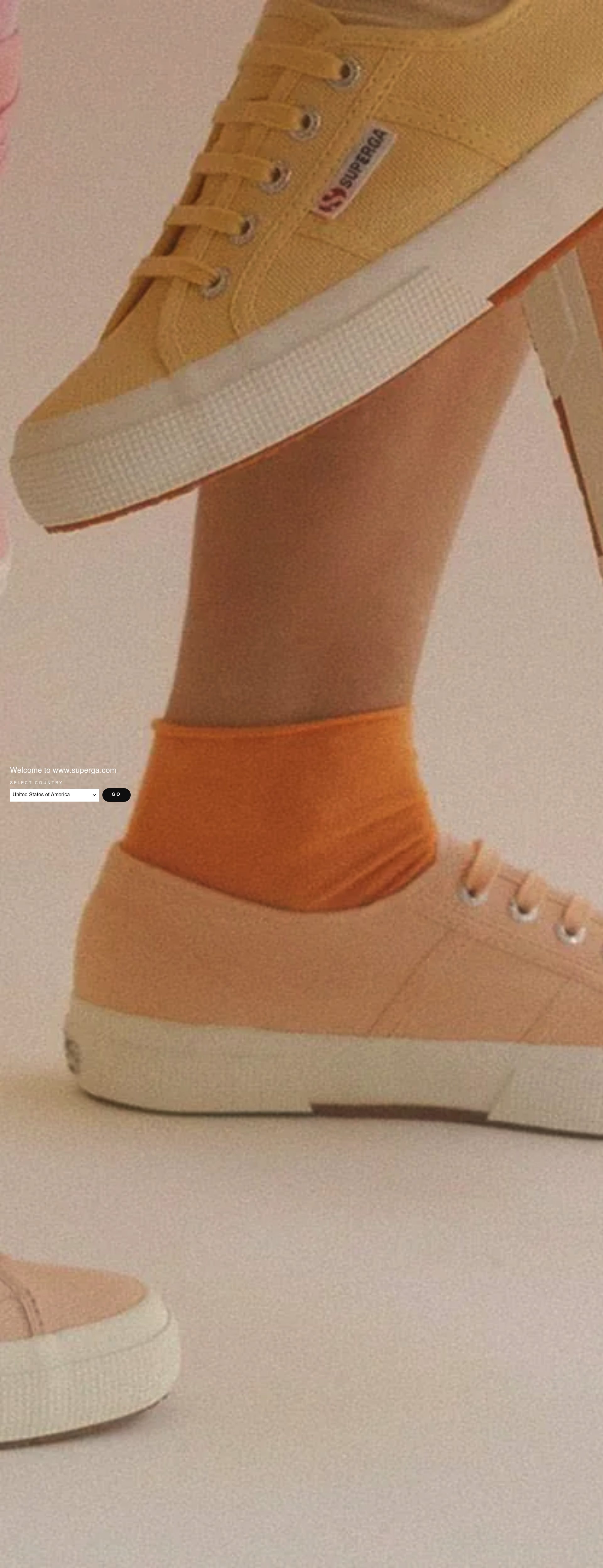
Superga is an Italian brand best known for its canvas trainers, but their headwear range, built around caps, bucket hats, and beanies, is a strong secondary category on their Shopify Plus store. The way Superga handles cross-category merchandising is worth studying: hats are surfaced on footwear PDPs as accessory bundles, and the hat collection pages link back to matching trainer colourways. That visual alignment increases accessory attachment rates without requiring a separate upsell mechanic.
Product pages for their hats are visually led: multiple angles, lifestyle context shots, and a clear colourway switcher that updates imagery in real time. For a brand where colourway is the primary differentiator between styles, the real-time imagery update is not a cosmetic feature but a functional conversion tool. Their free delivery threshold is surfaced in the cart at the point where adding a hat would push a shoe order over the limit, which is a precise placement that drives accessory attachment.
10. Beechfield Brands
Beechfield Brands operates primarily as a wholesale headwear supplier but runs a Shopify DTC channel that is one of the more sophisticated wholesale-to-consumer crossover operations in the category. Their store handles bulk pricing tiers alongside single-unit pricing without confusing the customer journey for either buyer type, which is a genuine structural challenge and one that most multi-channel hat brands get wrong. The navigation separates retail and trade flows clearly from the homepage.
Product pages carry sustainability data (organic cotton certifications, recycled materials) in a dedicated spec block, which speaks to the growing proportion of B2B buyers who have ESG requirements for branded merchandise. Their custom embroidery service is woven into the purchase flow at the hat-selection stage, not just as a post-purchase upsell, which captures the embroidery intent at the moment of highest relevance and converts what would otherwise be a separate sales conversation into an inline transaction.
If your hat store is losing customers at the product page or struggling with fit-uncertainty returns, the fix is usually measurement data, guided selling, and sharper collection navigation. See our Shopify design service or get in touch to discuss what that looks like for your store.
Frequently asked questions
What makes a hat Shopify store convert well?
The biggest conversion lever in headwear is removing fit uncertainty at the product page level. Stores that list crown height, brim width, and head circumference in structured spec blocks — alongside a measurement guide embedded directly on the PDP rather than buried in a separate PDF — see lower abandonment and fewer returns. Guided selling tools that route customers by face shape or occasion are the next highest-impact addition for stores with broad catalogues.
Which hat brands sell direct-to-consumer on Shopify?
Brixton, Lack of Color, Christys' London, Stetson, Tilley, and Barts all run DTC Shopify stores alongside any wholesale or retail distribution. Village Hat Shop and Pork Pie Hat Shop operate as pure-play online retailers. Superga uses Shopify Plus for its UK DTC channel. Beechfield Brands runs a hybrid store that serves both retail and trade buyers from the same Shopify instance.
How do hat stores handle sizing online?
The best hat stores present sizing in multiple formats: hat size in both inches and centimetres, plus a head circumference measurement guide linked directly from the size selector. Stetson does this well across their full western and dress hat range. Pork Pie Hat Shop goes further with exact brim measurement and crown depth in centimetres on every PDP, which is the level of specification a customer looking for a precise vintage fit needs to buy with confidence.
What content works best for hat product pages?
Structured specification blocks (brim width, crown height, material, fit type) are non-negotiable for any hat category. Beyond specs, lifestyle photography showing the hat worn in context rather than flat lay is the biggest visual conversion driver, as demonstrated by Lack of Color's editorial approach. Hat care guides embedded on the PDP reduce post-purchase regret and returns, particularly on felt and straw styles. For premium hats above £80, manufacturing provenance and materials sourcing copy serve as the conversion argument.
Is Shopify a good platform for selling hats?
Yes — Shopify and Shopify Plus handle the headwear category's specific requirements well. Metafield-based spec blocks make it straightforward to display structured sizing data. Shopify's native variant system handles colour, size, and fit combinations cleanly. The app ecosystem provides guided selling tools, try-before-you-buy mechanics, and bulk pricing tiers for brands serving both retail and trade buyers. The stores in this list demonstrate the full range of what's achievable at DTC, specialist retailer, and wholesale-crossover scale.