

Quick summary
Carhartt WIP is the strongest overall workwear store on Shopify, with product pages built around manufacturing specs that earn trust with customers who know their fabrics. FRAHM Jacket punches above its size as a small DTC brand, using construction narratives and use-case-filtered reviews to close considered purchases. Finisterre leads the field on sustainability transparency, listing mill sources and certifications on every PDP rather than treating eco credentials as marketing copy. Asket's Impact Receipt mechanic and half-step sizing system are the most commercially sophisticated fit and transparency tools in the category.
Workwear is one of the most commercially interesting niches in UK fashion ecommerce right now. The category spans genuine occupational clothing, smart-casual office dressing, and the heritage-inspired end of menswear, and the stores that succeed in it share a common trait: they justify their price point through specificity. Vague claims about quality do not work here. The best stores show exactly what they are made from, who they are made for, and why the construction decisions matter.
1. Carhartt WIP
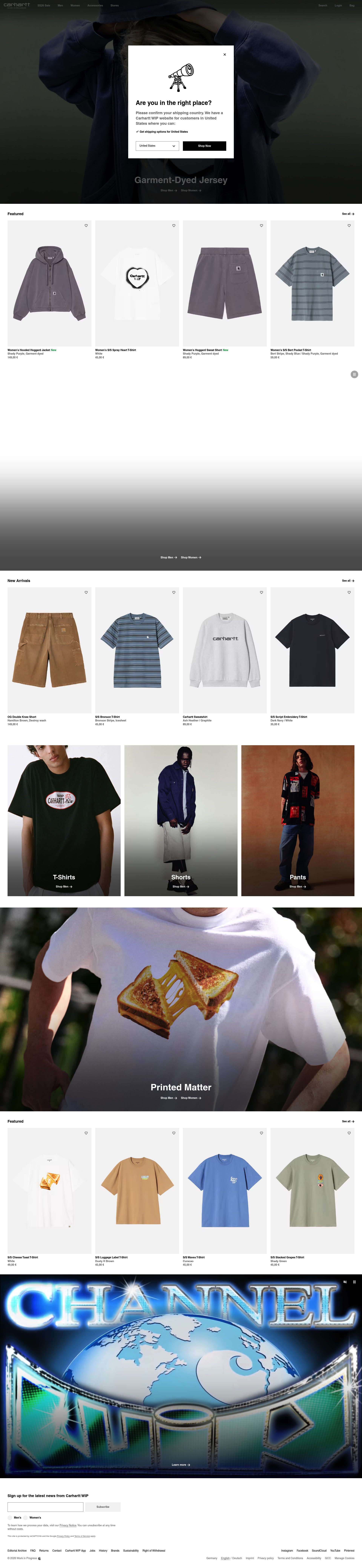
Carhartt WIP has turned a century-old American workwear brand into one of the most credible streetwear labels in Europe, and their Shopify store reflects that dual identity well. The navigation separates seasonal collections from core workwear staples without creating friction, so a customer arriving for a Duck Canvas chore coat and a customer arriving for a seasonal collab can both orient themselves immediately. Product pages lead with fabric and construction details that reference the original Carhartt heritage: the weight of the canvas, the bar-tack reinforcement points, the triple-stitched seams. These are not marketing claims, they are manufacturing specs, and that distinction earns trust with a customer who knows the difference.
Their collection pages use editorial photography that shows garments in actual work and outdoor contexts rather than studio white backgrounds, which is consistent with the brand positioning and makes sizing and fit easier to judge. Carhartt WIP runs a global Shopify Plus operation with strong localisation for the UK market, including GBP pricing, UK-specific delivery messaging, and UK stock availability displayed clearly on PDPs. Average order value is supported by outfit-style cross-sells that group a jacket with compatible trousers and a beanie, which is a low-friction upsell mechanism that fits naturally into the brand's layered-look aesthetic.
2. Dickies
Dickies positions itself across genuine trade workwear and lifestyle casualwear simultaneously, and their Shopify store manages the split better than most brands attempting the same thing. The primary navigation directs customers by use case: Work, Workwear, Life. That three-way structure is cleaner than many workwear stores that either go too deep into occupational categories or too shallow on the trade-ready product specs. For trade customers, PDPs include fabric weight, reinforcement details, and EN certification where applicable. For the lifestyle customer, the same information is present but deprioritised in favour of colour options and fit photography.
Dickies uses a bundle mechanic that is well-executed for occupational buyers: multi-pack trousers and workwear shirts at a discount, surfaced in a dedicated section rather than buried in a sale area. This targets a genuine buying behaviour in the trade market, where purchases are often for multiple units at once. Their UK delivery and returns policies are clearly stated on the homepage and repeated in the checkout flow, which is straightforward but worth noting because many workwear stores bury this information.
3. Finisterre
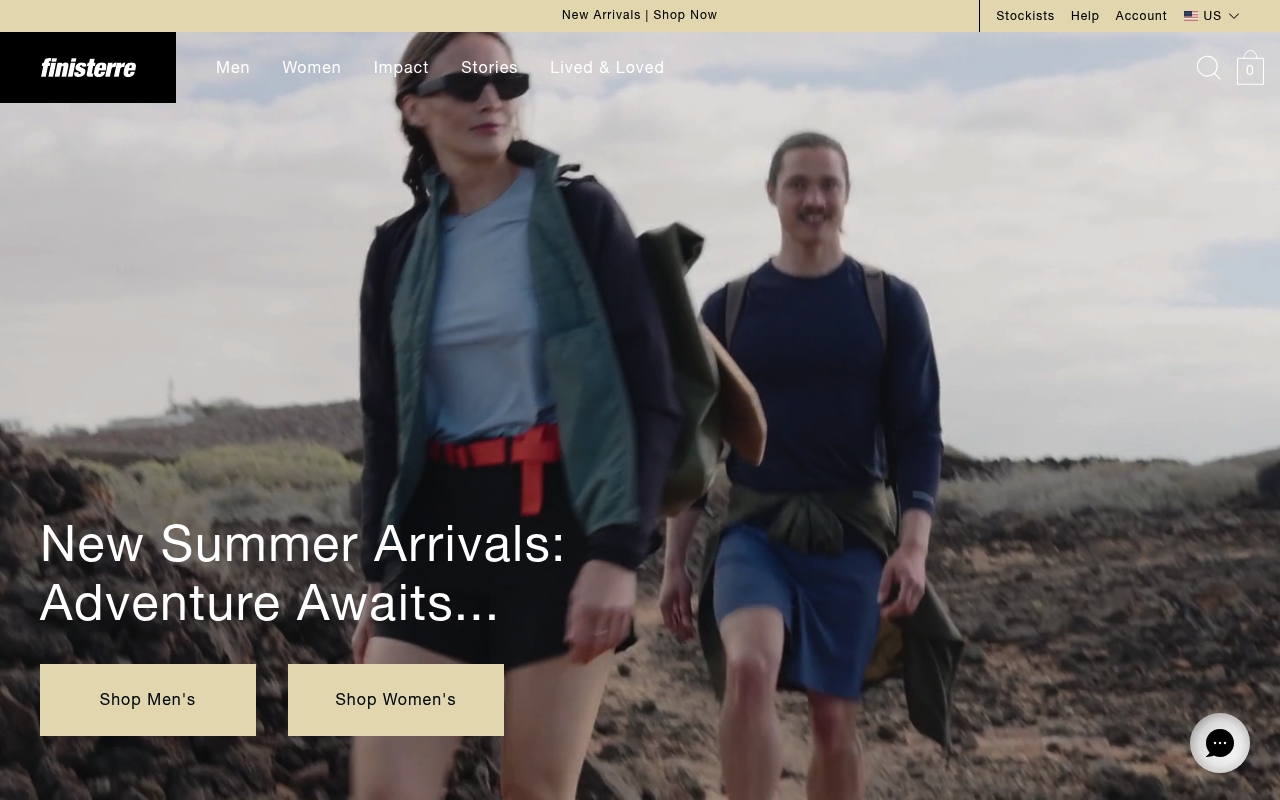
Finisterre is technically a surf and outdoor brand, but they sit firmly in the professional-durable end of the workwear market for anyone who works or spends time in cold and wet conditions. Their Shopify Plus store is one of the strongest examples of sustainability transparency done credibly rather than decoratively. Every product page lists the exact fabric composition, the certification body, the country of manufacture, and in many cases the specific mill or supplier. That granularity separates Finisterre from brands that use "sustainable" as a label rather than a specification.
Navigation is structured by product type and by activity, which works because their range is focused enough that neither taxonomy becomes unwieldy. Their editorial content, including journal articles about the conditions their products are designed for, is integrated with product cross-sells in a way that feels native rather than bolted on. The result is a store that builds the case for a higher price point through evidence rather than aspiration. Finisterre has also built their subscription and loyalty mechanics well: registered customers see personalised restock notifications and early access to new drops, which supports both repeat purchase rate and email capture.
4. Asket

Asket is a Swedish brand with a strong UK customer base, and their Shopify store is one of the most considered examples of radical product transparency in fashion ecommerce. Every garment has an Impact Receipt: a breakdown of the CO2, water, and energy cost of producing that specific item. That is an ecommerce decision with real commercial weight behind it, because it gives the customer a concrete reason to justify a higher price rather than asking them to take a brand's word for it.
Their fit system is unusually robust: sizes run in half-step increments, each PDP includes a fit calculator based on height, weight, and preferred fit, and the size recommendation is genuinely granular rather than just showing a generic chart. This level of fit confidence is directly correlated with lower return rates, and for a brand selling premium basics at prices that require justification, that matters commercially. Asket's navigation is deliberately minimal: a small, focused range, structured cleanly, with no visual noise. That restraint is itself a brand statement.
5. COS
COS operates at the smart workwear and considered-dressing end of the market, and their Shopify store handles a large, regularly refreshed collection without losing clarity. The navigation uses a clean mega-menu with visual previews that help customers orient themselves in a range that spans women's, men's, and kids' across multiple categories. Product pages use model photography at multiple angles with clear outfit context, which is important for workwear where customers need to assess formality level and drape before buying.
Their fabric and care information is thorough at the PDP level, and they surface size and fit notes that go beyond a generic chart. COS uses an in-store stock check tool that links online browsing to physical stock availability, which is a strong omnichannel mechanic for a brand with UK stores. Their checkout is clean and fast, with Apple Pay and saved payment methods prominent. The store conversion fundamentals are well-executed: clear CTAs, persistent basket, minimal distractions in the purchase flow.
6. Uniform Wares
Uniform Wares is a London-based watch brand that sits in the professional accessories end of the workwear market. Their Shopify store is small in SKU count but precise in execution. Every watch PDP features detailed product specifications: movement type, case diameter, lug width, water resistance rating, and crystal material. For a customer making a considered purchase at this price point, that level of specification is expected, and delivering it clearly reduces the research burden that would otherwise push them to a competitor's site.
The store uses a single-product focus on collection pages: each watch is photographed against a clean background with a second lifestyle shot showing it on a wrist in a professional context. That combination of technical spec and real-world context is the right approach for a product where accuracy and wearability both need to be demonstrated. Their returns policy is generous and clearly stated, which is important for a category where customers cannot physically try the product before buying.
7. Mercer Amsterdam
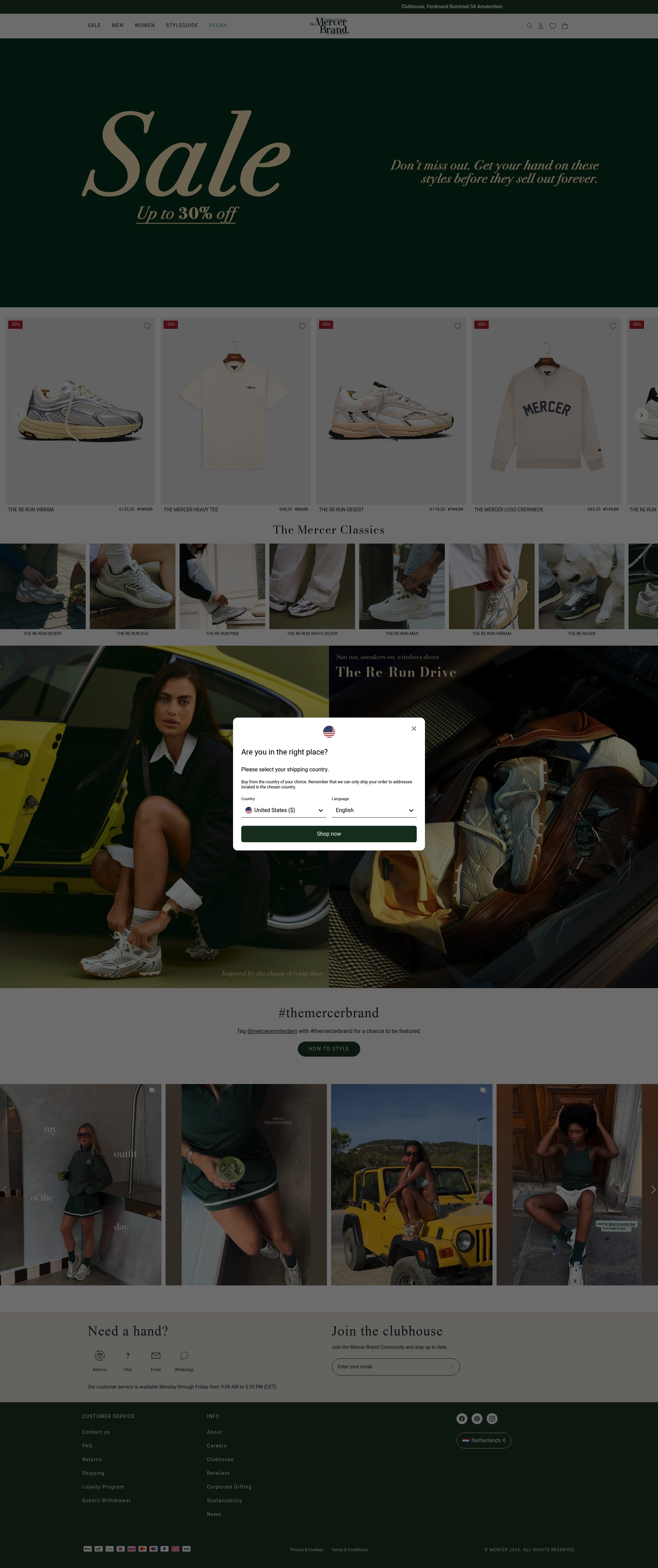
Mercer Amsterdam produces sharp, work-appropriate tailoring and sells primarily through their own Shopify store. Their product photography is strong: tailored pieces are shown in editorial and street contexts that communicate the formality level without requiring the customer to interpret a studio shot. Fit is central to their PDP content, with a fit guide that maps body measurements to the brand's sizing system and notes on how each cut behaves: whether a jacket runs slim or true to size, and how a trouser is intended to sit.
Their bundling mechanic is effective for a tailoring brand: a suit builder that lets customers select a jacket and matching trousers, with the bundle price clearly showing the saving versus individual purchase. That mechanic directly addresses a genuine buying behaviour, which is customers who want to buy a matched set but are comparing the total cost against department store alternatives. Mercer Amsterdam's UK delivery messaging and EU shipping clarity are handled well, which matters for a European brand with a significant UK customer base post-2021.
8. FRAHM Jacket
FRAHM is a direct-to-consumer outerwear brand focused on functional, work-appropriate jackets for men. Their Shopify store is a strong example of a small DTC brand building purchase confidence through content depth. Each jacket PDP includes a detailed breakdown of the construction: the lining materials, the pocket engineering, the collar structure, and the specific design decisions made to make the jacket suitable for wearing in an office context as well as outdoors. That level of narrative around product decisions is persuasive because it demonstrates knowledge rather than just enthusiasm.
FRAHM uses customer reviews effectively: review content is filtered and surfaced by use case (commuting, office, outdoor), so a buyer can quickly find reviews from customers whose situation matches their own. Their email capture is handled through a waitlist mechanic for out-of-stock styles, which is a conversion tool that also functions as demand validation. The store runs on Shopify and handles the full purchase journey well: clear photography, thorough product information, and a checkout that does not introduce friction.
9. Oliver Spencer
Oliver Spencer is a British menswear brand with a strong workwear and smart-casual range. Their Shopify store handles a seasonally refreshed collection well, with clear sale and new-in sections that do not dilute the premium brand positioning. Product pages are detailed on fabric and construction, which is the right approach for a brand selling tailored trousers, structured shirts, and outerwear at prices that require justification. Fabric names are explained in plain terms alongside technical specifications.
Their outfit suggestions on product pages are well-implemented: they show complete looks that include all items worn in the photography, with direct add-to-basket links for each piece. This cross-sell mechanic is more effective than a standard "you might also like" carousel because it presents a finished outfit rather than a list of unrelated recommendations. Oliver Spencer's store also handles their made-to-order and collaboration pieces clearly, separating them from the core range so standard delivery expectations are not misread.
10. Caledonian
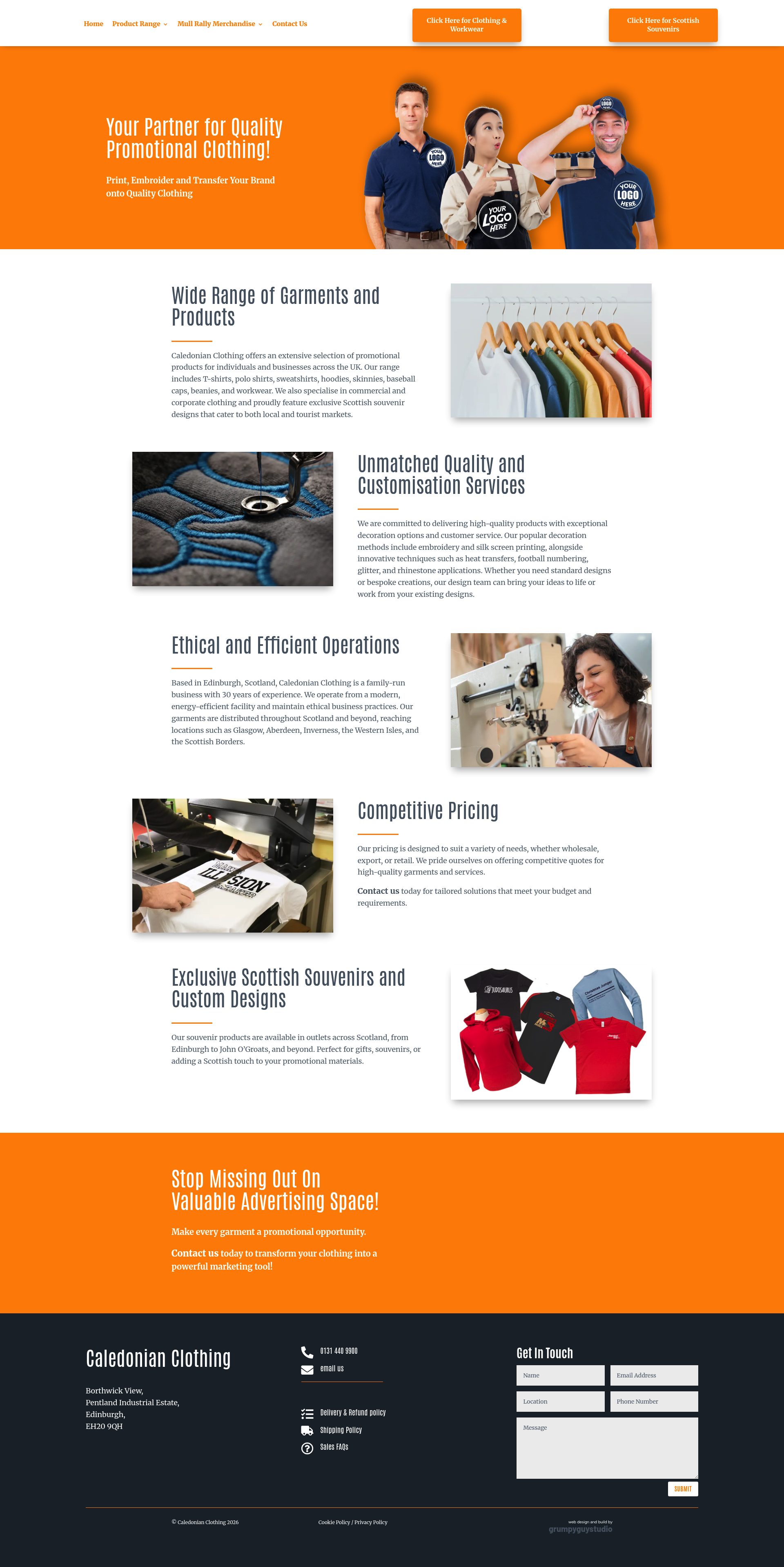
Caledonian produces heavy-duty outdoor and workwear at the more functional end of the spectrum, and their Shopify store reflects that positioning through product page clarity: weight, construction, and intended use are front and centre on every PDP. Their product photography shows garments in outdoor working conditions rather than studio settings, which communicates durability more credibly than any copy claim. Sizing information includes chest, shoulder, and sleeve measurements rather than just small, medium, and large.
Their UK-specific delivery and returns information is prominent and clear, and their trade account section is handled cleanly for repeat buyers who order in volume. Caledonian's navigation uses a logical category structure that separates by garment type, fabric weight, and specific trade application, which makes it efficient for a trade buyer who knows exactly what they need and does not want to browse. The store demonstrates that strong ecommerce fundamentals and product-first content are the right combination for a brand competing on quality and durability at a mid-to-premium price point.
If your workwear or apparel store is not converting at the level these brands achieve, the gap is usually in product page depth, fit confidence, or brand storytelling. See our Shopify design service or get in touch to talk through what is possible.
Frequently asked questions
Which Shopify workwear stores have the best product pages?
Carhartt WIP and FRAHM Jacket lead on product page depth. Carhartt WIP cites fabric weights, bar-tack reinforcement points, and triple-stitched seam specs rather than generic quality claims. FRAHM goes further by explaining the specific design decisions behind each construction detail, which builds genuine purchase confidence for customers spending £300 or more on a jacket.
Do workwear stores on Shopify handle trade and bulk buyers well?
Dickies handles bulk buyers better than most, with a multi-pack bundle mechanic surfaced in a dedicated section rather than buried in a sale tab. Caledonian also caters to trade accounts with a clean repeat-buyer section and sizing information that includes chest, shoulder, and sleeve measurements rather than just S, M, and L. Both brands display delivery and returns policies clearly at the top of the funnel, which matters for buyers placing larger orders.
How do the best workwear stores handle sustainability claims?
Finisterre and Asket set the standard, and the gap between them and the rest of the field is significant. Finisterre lists the exact fabric composition, certification body, country of manufacture, and specific mill on every PDP. Asket goes a step further with an Impact Receipt per garment that quantifies the CO2, water, and energy cost of production in concrete numbers. Both approaches give customers a specific reason to justify a higher price rather than asking them to trust a label.
What sizing and fit tools do the best workwear Shopify stores use?
Asket runs the most sophisticated fit system: sizes in half-step increments, a fit calculator based on height, weight, and preferred fit, and granular size recommendations rather than a generic chart. Mercer Amsterdam uses a fit guide that maps body measurements to the brand's sizing system and flags how each cut behaves. FRAHM surfaces customer reviews filtered by use case so buyers can find feedback from people whose working context matches their own. Lower return rates are the commercial payoff for all three approaches.
Which workwear Shopify stores are best for smart and office dressing?
COS, Mercer Amsterdam, and Oliver Spencer are the strongest picks for smart workwear. COS handles a large, regularly refreshed range without losing navigational clarity, and its in-store stock check tool connects online browsing to physical availability. Mercer Amsterdam's suit builder mechanic lets customers select jacket and matching trousers with a clear bundle saving displayed. Oliver Spencer's outfit suggestions on PDPs show complete looks with direct add-to-basket links for each piece, which is a more effective cross-sell than a standard recommendations carousel.